Men and Mental Health: Why Stoicism Is Killing You
The strong silent type is a statistical risk factor. Men who don't talk about their mental health die earlier, and not for poetic reasons.
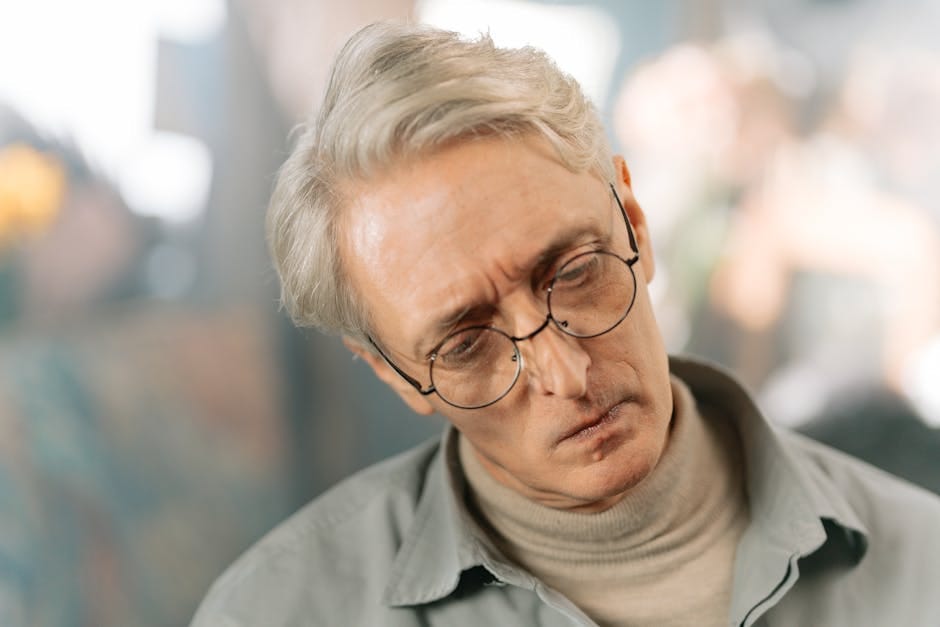
Men die by suicide at roughly four times the rate of women in the United States. Men are less likely to seek therapy, less likely to discuss mental health with friends, less likely to get prescribed antidepressants when depressed. Men suffer in silence at population scale, and the silence is literally killing us.
There's a cultural ideal that equates male strength with stoicism — handle it yourself, don't burden others, toughness through adversity. This ideal isn't entirely wrong. Self-reliance matters; complaint isn't a virtue. But the version that's been absorbed by many middle-aged men is a dangerous caricature: never acknowledge distress, never ask for help, process alone. That pattern produces the suicide statistics. It's not philosophical strength; it's risk factor.
The data is unambiguous: men who talk about their mental health with other men, partners, or professionals have substantially better outcomes than men who don't. The strong-silent posture isn't protective; it's toxic.
What Depression Looks Like in Men
Men often present differently from the textbook. While women more commonly report sadness, tearfulness, and hopelessness — the classic DSM picture — men commonly express depression as:
- Irritability and anger (sometimes the dominant symptom)
- Loss of interest in usual activities (anhedonia)
- Withdrawal from relationships, hobbies, and family
- Increased alcohol or substance use
- Risk-taking behavior
- Physical symptoms — fatigue, aches, gastrointestinal issues
- Sleep disturbance (often insomnia, sometimes hypersomnia)
- Cognitive impairment — difficulty focusing, indecision
- Workaholism or escapism into activities
- Decreased libido
Notice what's often missing: the self-awareness that "I'm depressed." Men may recognize "I feel like crap," "I'm not myself," "I can't keep doing this" — but not label it as depression. This delays help-seeking further.
A man who hasn't enjoyed anything in four months, is drinking more than usual, is short-tempered with his family, and can't focus at work — that's textbook major depression, whether or not he'd use that word.
The Suicide Statistics, Honestly
Suicide is the leading cause of death for men aged 15-44 in many developed countries. The peak age for male suicide is 45-64. In the US, roughly 75% of all suicides are men, despite women attempting suicide more often — men use more lethal methods and die more reliably when they attempt.
Warning signs:
- Verbal statements about being a burden, wanting it to end, or not being around
- Withdrawing from loved ones and activities
- Giving away possessions or setting affairs in order
- Sudden calm after period of distress (can indicate decision made)
- Access to means (firearms, stockpiled medications)
- Recent major life stressor (job loss, divorce, bereavement, legal issues)
- Previous suicide attempts
- Family history
- Substance abuse escalation
Asking someone directly about suicidal thoughts does not plant the idea. Research is unambiguous on this — direct asking is safe and often the opening the person was waiting for.
If you're having thoughts of suicide, the 988 Suicide and Crisis Lifeline in the US provides immediate phone and text support. This isn't signs of weakness — it's the appropriate response to a medical crisis.
Why Men Don't Ask for Help
The barriers aren't mysterious:
- Cultural messaging equating asking for help with weakness
- Fear of being seen as less masculine, competent, or capable
- Belief that problems can/should be solved alone
- Concern about professional or social consequences of diagnosis
- Therapy seen as "for other people"
- Practical barriers — cost, time, availability
- Discomfort discussing emotions outside familiar patterns
- Not knowing what's available or how to start
These are real barriers. They're also barriers that can be overcome once identified. The first step is recognizing that the "I handle this alone" response isn't working if you're symptomatic.
The Therapy Conversation
Therapy isn't a woman thing, a weak thing, or a broken-person thing. It's a practical skill — having a competent professional help you understand your own patterns, develop tools, and work through specific issues. For most men who try it, it's more useful and more practical than expected.
Modalities that work particularly well for men:
CBT (Cognitive Behavioral Therapy): Structured, problem-solving focused, often short-term. Identifies thought patterns and develops practical tools. Evidence-based for depression, anxiety, OCD, insomnia. Good fit for men who like practical, actionable frameworks.
ACT (Acceptance and Commitment Therapy): Focus on values-based living and psychological flexibility. Less about "fixing" feelings, more about living well despite them. Often resonates with men who dislike traditional "how does that make you feel" approaches.
Psychodynamic therapy: Explores underlying patterns from earlier experiences that shape current behavior. Longer-term, more exploratory. Not for everyone but powerful for specific issues (relationship patterns, recurrent problems).
EMDR (Eye Movement Desensitization and Reprocessing): Specifically for trauma processing. Evidence-based, often rapid, non-talk-based partly. Useful for men carrying trauma who don't want to deeply verbalize it.
Group therapy: Men's groups, veteran's groups, AA and similar. Powerful combination of accountability, shared experience, and structure. Often free or low-cost.
Not all therapists are good, and fit matters. Interview 2-3 before committing. Ask about their approach, experience with men, and orientation to the issues you're dealing with. A bad therapist match can sour people on therapy entirely; a good match is often transformative.
Medication: The Other Conversation
Antidepressants aren't a substitute for therapy but they're not a moral failure either. For moderate-to-severe depression, the evidence strongly supports combined medication plus therapy over either alone.
SSRIs (sertraline, escitalopram, fluoxetine) are first-line. They work for roughly 60-70% of people prescribed them. Side effects vary — sexual dysfunction is common and often bothersome for men; emotional blunting is real but usually manageable with dose adjustment.
SNRIs (venlafaxine, duloxetine) are alternatives, often useful if chronic pain or fatigue is a major component.
Bupropion (Wellbutrin) lacks the sexual side effects of SSRIs, often energizing rather than sedating. Popular choice for men concerned about libido. Talk to your doctor about whether it's appropriate for your specific case.
Newer options: esketamine (Spravato) for treatment-resistant depression; ketamine infusions off-label; psilocybin in trial settings. Rapidly evolving landscape.
Key point: if you're depressed enough that therapy alone isn't moving you in 3-4 months, medication is worth discussing with a psychiatrist, not dismissing as weakness.
Lifestyle Interventions That Actually Work
Not as substitutes for therapy or medication in moderate-severe depression, but powerful adjuncts:
Exercise. The effect size of regular aerobic exercise for mild-moderate depression is comparable to antidepressants in some meta-analyses. Minimum 150 minutes per week of moderate-intensity activity; strength training adds additional benefit. This is not negotiable for men tracking their mental health.
Sleep. Chronic sleep restriction substantially worsens mood. Fixing sleep is sometimes sufficient to resolve mild depressive symptoms; always necessary alongside other interventions.
Alcohol reduction. Alcohol is a depressant. Men in depressive episodes often drink more, which deepens depression. The cycle is important to break.
Social connection. Isolation amplifies depression. Even imperfect social engagement beats isolation. Call one friend per week. Join something — a gym, a league, a group. Reduce loneliness materially.
Omega-3. Modest but consistent effect for depression adjunctive treatment at 1-2 g EPA daily.
Vitamin D. If deficient, correction helps. If already replete, no effect.
Light exposure. Morning bright light helps circadian rhythm and mood. Particularly useful in northern latitudes or indoor-working men.
Nature time. Modest but real effects from time outside, particularly in natural environments.
How to Start
If you suspect you're struggling:
- Tell one person. Anyone you trust. Not the whole world; one person. Break the silence.
- Book a doctor's appointment. Primary care can screen for depression, check for underlying medical causes (thyroid, testosterone, anemia, B12, sleep apnea), and refer for further care.
- Try therapy. Even three sessions is more than zero. Many therapists offer free consultation calls.
- Consider medication if symptoms are significant and persistent. No shame.
- Address lifestyle concurrently — exercise, sleep, alcohol, social connection.
The stigma is weaker than it used to be. Therapy has gone mainstream. Your colleagues, friends, and family members are more likely than ever to have been through it themselves. The "nobody talks about this" feeling isn't accurate.
The Stoicism Question
Real stoicism — the philosophical tradition — emphasizes focusing on what you can control, accepting what you can't, and pursuing virtue with consistency. It doesn't advocate suppressing emotional distress or refusing help. Marcus Aurelius wrote about seeking advice from wise friends. The Stoics had therapists, effectively.
The version that's poisoning modern male culture is a shallow imitation — tough-guy performance mistaken for wisdom. Real strength includes knowing when you need help and having the capacity to ask for it. That's a harder skill than silent suffering, and it's the one that actually produces durable well-being.
If this article reads like it's aimed at you, it is. Pick up the phone. Book the appointment. Start the conversation. The statistics on men who don't are grim. The outcomes of men who do are measurably better. Pick the right side of that distribution.