The Sleep Apnea Epidemic: 80% of Cases in Men Go Undiagnosed
Snoring isn't funny. For roughly 30 million American men, it's a sign of a condition actively shortening their lives and tanking their hormones.
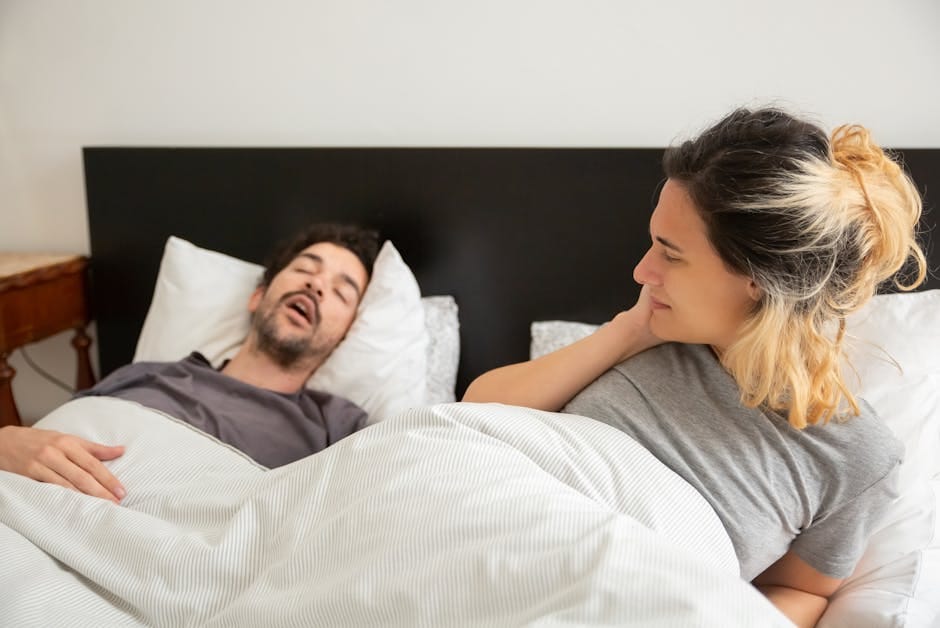
Your wife elbows you in the ribs because you stopped breathing. You gasp, roll over, and don't remember. You wake up tired every morning and attribute it to getting older. Your testosterone is low, your blood pressure is creeping up, and your doctor is discussing statins. Nobody has yet asked you the one question that would explain all of it: do you snore?
Obstructive sleep apnea (OSA) is one of the most common, most impactful, and most underdiagnosed medical conditions in men over 35. The American Academy of Sleep Medicine estimates around 30 million Americans have moderate-to-severe OSA. The majority — by most calculations, 80% or more — have never been tested. They're walking around with a condition that's actively raising their cardiovascular risk, suppressing their hormones, and fragmenting their sleep every single night.
What Actually Happens in Apnea
During sleep, the muscles in your throat relax. In most people, the airway stays open. In people with OSA, the airway collapses partially or completely. Breathing stops — for 10 seconds, 30 seconds, occasionally over a minute. Blood oxygen drops. CO2 rises. The brainstem detects the crisis and triggers a mini-arousal — you don't wake up consciously, but you snort, gasp, or shift position, the airway opens, breathing resumes.
Then you fall back into deeper sleep, and it happens again.
Severe OSA: 30+ events per hour. Every minute, some degree of cardiovascular stress. 240+ events per 8-hour night. Your sympathetic nervous system never gets the full rest it needs. Your cortisol stays elevated. Your oxygen saturation dips and recovers dozens of times. You wake up exhausted despite "sleeping" all night.
Who Gets OSA
Risk factors:
- Male (2-3x risk compared to premenopausal women; gap narrows after menopause)
- Overweight/obese (BMI over 30 is a major risk factor)
- Neck circumference over 17 inches
- Age over 40
- Alcohol use (relaxes throat muscles further)
- Smoking
- Enlarged tonsils or uvula
- Recessed jaw or narrow airway anatomy
- Family history
But — and this matters — plenty of lean fit men have OSA driven entirely by anatomy. Narrow airways, recessed chins, nasal obstruction. You don't have to be overweight. A 35-year-old runner with 8% body fat can have severe OSA if his airway geometry is unfavorable.
The Symptoms You Probably Dismiss
Classic OSA presentation:
- Loud, chronic snoring (often disruptive to a partner)
- Witnessed pauses in breathing or gasping/choking awakenings
- Morning headaches
- Waking unrefreshed despite 7-8 hours
- Excessive daytime sleepiness (Epworth Sleepiness Scale score elevated)
- Needing to urinate 2+ times per night
- Dry mouth or sore throat in the morning
- Decreased libido
- Difficulty concentrating
- Irritability, mood issues
You probably check 3-5 of those and are telling yourself it's normal middle age. A lot of it isn't. The overlap between "midlife malaise" and "undiagnosed sleep apnea" is massive.
Associated Conditions: Why This Matters Medically
Untreated OSA is linked to:
- 2-3x higher risk of hypertension (some of which is directly caused by apnea and resolves with treatment)
- Higher risk of atrial fibrillation
- Increased stroke risk
- Higher risk of type 2 diabetes (independent of BMI)
- Low testosterone — treating OSA can raise morning T by 15-25% in 6 months
- Depression
- Motor vehicle accidents (drowsy driving risk comparable to legally drunk)
- Erectile dysfunction
- Cognitive decline over years
This is not a quality-of-life optimization issue. This is a health-span issue.
How to Actually Get Tested
Two main options:
Home sleep apnea test (HSAT). A small kit shipped to your house. You wear a chest strap, nasal cannula, and finger pulse oximeter for one night. Ships back to the sleep center, interpreted by a sleep physician. Covered by most insurance if ordered through a doctor. Cost without insurance is typically $150-300 direct-to-consumer through services like Lofta, ClaritySleep, or Wesper.
HSAT is perfectly adequate for diagnosing moderate-to-severe OSA. It has limitations for complex cases (severe insomnia, central apnea, pediatric patients) but for the typical middle-aged man with snoring and fatigue, it's the appropriate first test.
In-lab polysomnography (PSG). Overnight in a sleep lab with full EEG, EMG, and monitoring. More expensive ($1,000-3,000 often covered by insurance). Required for complex cases or when HSAT is equivocal.
If you suspect OSA, ask your primary care or go through a telehealth sleep service. Most will screen you with a questionnaire (Epworth, STOP-BANG) and order an HSAT if indicated. You should have a diagnosis within 2-4 weeks.
Reading Your Results: AHI
The key number is AHI — apnea-hypopnea index. Events per hour of sleep.
- Under 5: normal
- 5-15: mild OSA
- 15-30: moderate OSA
- 30+: severe OSA
Also check nadir SpO2 (lowest oxygen saturation during the night). Drops below 90% sustained are concerning; below 85% is significant; below 80% is severe.
Treatment Options
CPAP (Continuous Positive Airway Pressure). The gold standard. A small machine pushes air through a mask to hold your airway open. Effective in roughly 100% of users if they tolerate it. Problem: tolerance. Maybe 40-60% of prescribed users abandon CPAP within a year due to mask discomfort, claustrophobia, or mechanical issues.
Modern CPAP machines are much better than 10 years ago. Quieter, smaller, with humidification and auto-adjusting pressure. The newer nasal pillow masks are often better tolerated than full-face masks. If CPAP didn't work for you in 2015, the 2025 experience is genuinely different.
Proper fitting and a short adjustment period (2-4 weeks) determine long-term success. Working with a respiratory therapist or sleep medicine clinic for fitting pays off.
Oral appliances (mandibular advancement devices). Custom-fit dental device worn at night, pushes the lower jaw forward to open the airway. Less effective than CPAP on average but works well for mild-to-moderate OSA and often better tolerated. Custom-made by a sleep dentist, $1,500-2,500 often covered partially by insurance. Boil-and-bite OTC versions exist but are lower quality.
Positional therapy. Some men's apnea is purely positional — bad on the back, fine on the side. A weighted bumper or vibrating device that nudges you off your back can work for pure positional OSA. Cheap to try and test.
Weight loss. For overweight OSA patients, meaningful weight loss (10%+ of body weight) can cut AHI in half or more. Doesn't always eliminate OSA, but often moves it to manageable levels. Combined with other treatments, excellent long-term strategy.
Hypoglossal nerve stimulation (Inspire). Implanted device that stimulates the tongue muscle to keep the airway open. FDA-approved for moderate-to-severe OSA in patients who can't tolerate CPAP. Surgical procedure, works well for appropriate candidates. Expensive and not always covered; approval process typically requires documented CPAP failure.
Surgery. UPPP (removing tissue from the back of the throat) has a mixed record and significant side effects. Jaw advancement surgery (MMA) is highly effective but major surgery. Usually reserved for specific anatomic situations.
GLP-1 agonists. Semaglutide and tirzepatide, used for weight loss, have shown dramatic OSA improvements in recent trials (SURMOUNT-OSA showed 63% reduction in AHI). For obese OSA patients, GLP-1 therapy is increasingly part of the treatment landscape.
Adjunct Interventions
Myofunctional therapy — targeted tongue and throat exercises — has some evidence for mild OSA, modest effect. Worth combining with other approaches.
Avoiding alcohol within 3-4 hours of bedtime. Alcohol relaxes airway muscles and worsens OSA dramatically.
Sleeping on your side. Even without a positional device, training yourself out of back sleeping helps.
Nasal steroids if allergies or chronic congestion contribute to airway obstruction.
The Big Picture
If you're over 35, snoring, and feeling worse than you think you should, get an HSAT. It's cheap, easy, and one of the highest-yield medical tests available. You'll either rule it out and move on or identify a condition whose treatment can add years to your life and restore energy levels you'd forgotten were possible.
Men frequently spend months chasing testosterone optimization, cortisol reduction, or mystery fatigue workups while ignoring the snoring that's the actual cause. If that's you, start with an airway, not a supplement stack.