Sleep Optimization for Men: Why 7 Hours Is the Wrong Target
The eight-hour rule isn't science; it's a round number that feels tidy. Your actual sleep need is genetic, age-dependent, and almost certainly more than you're getting.
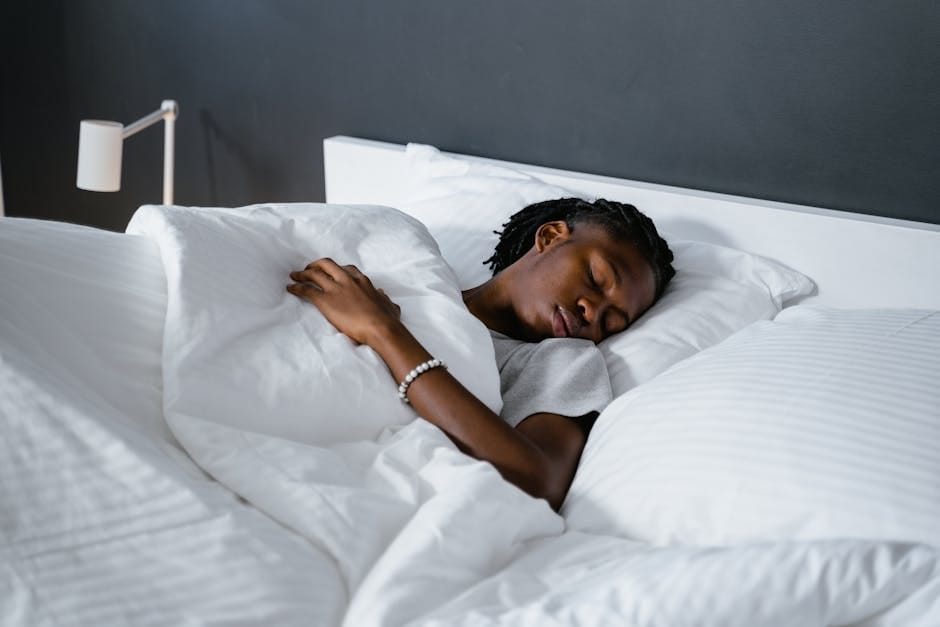
You've heard the guideline. Seven to nine hours of sleep. You've probably settled on seven because it sounds adult and responsible and fits around your life. If you're consistently sleeping seven hours and feeling okay, the part of you defending that number is the part that's already adapted to mild chronic sleep deprivation and calls it baseline.
The "seven hours is enough" message came from large epidemiological studies that found all-cause mortality lowest at around seven hours. What those studies actually showed is that the middle of a population distribution has the lowest average bad outcomes — which says nothing about your individual sleep need, and doesn't account for the confounders (people who sleep much more may be sicker for other reasons; people who sleep much less may be stressed or young).
Individual sleep need is genetic, highly variable, and for most men, somewhere between 7.5 and 9 hours. Truly short sleepers — people who thrive on 6 hours — exist but represent maybe 1-3% of adults. If you think you're one, you probably aren't.
How to Actually Figure Out Your Sleep Need
A reasonable experiment: for two weeks of vacation, no alarm, no obligations. Go to bed when tired, wake naturally. After the first 3-5 days (which will be longer than normal as you repay sleep debt), you'll settle into your natural sleep length. For most men this is 7.5-9 hours. Some men land around 7. Some genuinely need 9+.
If you can't do the two-week vacation experiment, try this: for 10 days, set a bedtime that allows 9 hours in bed. No alarm. See what happens. Most men will sleep longer than they expected for the first week, then stabilize at their true sleep need.
The result often surprises people. Men who insist they "only need 6.5 hours" routinely settle at 8 once they stop fighting it.
Sleep Debt Is Real and Accumulates
A week of 6-hour nights produces cognitive deficits equivalent to 0.08% blood alcohol content by the end of the week. You don't notice because your adjustment to impaired function is subjective — you feel "tired" in week 1 and "normal" by week 3, but your objective reaction time, judgment, and memory remain impaired.
The Whitehall II cohort study tracked over 10,000 British civil servants across decades. Men sleeping 5 hours or less showed higher rates of cardiovascular disease, diabetes, and all-cause mortality. The effect was linear, not a threshold. Every hour short of adequate adds risk.
Weekend catch-up sleep only partially repays the debt. A 2019 study in Current Biology showed that weekend recovery didn't fully restore insulin sensitivity degraded by weekday sleep restriction. You can't caffeinate through Monday-Friday and heal on Saturday.
What Poor Sleep Does to Male Hormones
Sleep is when testosterone is produced. Most testosterone release in men happens during deep sleep in the second half of the night. One week of 5-hour nights lowers morning testosterone by 10-15%. A month of chronic sleep restriction can age your endocrine profile by a decade.
Other hormonal effects of insufficient sleep:
- Cortisol elevated the next evening (should be lowest)
- Growth hormone pulse blunted (compromises recovery and body composition)
- Leptin down, ghrelin up (increases hunger, particularly for calorie-dense foods)
- Insulin sensitivity drops within days
- Inflammation markers rise (hsCRP, IL-6)
A man pursuing testosterone optimization while sleeping 6 hours is contradicting himself. Fix sleep first; everything else works better afterward.
Sleep Architecture: Why Total Hours Isn't the Whole Story
Sleep has stages — light sleep, deep sleep (slow-wave), and REM. Each serves different functions. Deep sleep is most concentrated in the first half of the night and governs physical recovery, immune function, and memory consolidation. REM is concentrated in the second half and supports emotional processing and cognitive integration.
Cutting sleep short disproportionately damages REM. Going to bed late disproportionately damages deep sleep. A 6-hour night with late bedtime is substantially worse than a 6-hour night with early bedtime, even though total hours are identical.
Quality matters alongside quantity. Signs of poor-quality sleep despite adequate hours:
- Waking unrefreshed despite 8 hours in bed
- Morning grogginess lasting 1-2 hours
- Consistent mid-afternoon crashes
- Waking during the night unable to fall back asleep
- Restless sleep (partner's observation)
- Snoring (partner's observation)
Any of these warrants investigation. Especially snoring plus daytime tiredness — that's sleep apnea until proven otherwise. More on that later in this series.
The Levers That Actually Move Sleep Quality
Timing. Consistent bedtime and wake time, within 30-60 minutes, including weekends. Your circadian rhythm benefits enormously from predictability. Big weekend shifts produce "social jet lag" that takes days to recover from.
Light. Bright light in the morning (10-30 minutes of sun or a 10,000-lux light box) strengthens circadian signaling. Dim, warm light in the evening (under 3000K, below 50 lux where possible) reduces cortisol and allows melatonin to rise. Blue-light-blocking glasses 2 hours before bed have modest evidence.
Temperature. Cool bedroom — 60-68°F / 16-20°C is the commonly cited range. Core body temperature drops during sleep; environments that block this cooling (warm rooms, heavy bedding, hot partners) fragment sleep.
Darkness. Complete darkness. Blackout curtains, covering device LEDs, eye mask if needed. Even small amounts of light exposure reduce melatonin and suppress sleep depth.
Caffeine timing. Caffeine has a half-life of 5-6 hours in most people (up to 10 hours in slow metabolizers). Coffee at 2 pm means a quarter of the dose is still circulating at 10 pm. Cutoff by 12-2 pm based on your sensitivity.
Alcohol. The myth that alcohol helps sleep is dangerously persistent. Alcohol decreases sleep latency (makes you fall asleep faster) but severely degrades sleep architecture. Deep sleep and REM are both reduced. Even two drinks three hours before bed measurably damages sleep quality.
Meal timing. Large meals within 2-3 hours of bedtime delay deep sleep onset. Moderate meal, earlier in the evening, is the sleep-friendlier pattern.
Exercise timing. Evening intense exercise raises core body temperature and cortisol, which can delay sleep in sensitive individuals. Morning or afternoon training is preferable for most. Light evening exercise is fine.
The Sleep Stacks That Are Mostly Noise
Magnesium glycinate has reasonable evidence for improving sleep quality in deficient individuals. In replete men, the effect is small.
Melatonin works — for specific uses (jet lag, phase-shifting) at low doses (0.3-1 mg). The 5-10 mg over-the-counter doses are far above physiological levels and cause morning grogginess. Many men take melatonin nightly for years, building dependence and disrupting their own production.
Glycine at 3 g at bedtime has some evidence for improving subjective sleep quality.
Ashwagandha modestly improves sleep via cortisol reduction.
L-theanine reduces sleep latency in some individuals.
None of these substitute for the behavioral fundamentals. If you drink coffee until 5 pm, have a nightcap, and sleep with the TV on, no supplement will rescue your sleep.
Sleep Tracking: Useful or Obsessive?
Sleep trackers (Oura, WHOOP, Apple Watch) give you data but can also create anxiety — orthosomnia, where worrying about your tracker score disturbs your sleep. The data they provide on total sleep time is reasonably accurate. Stage-level data (deep, REM) is less reliable — they're inferring from heart rate and movement, and individual accuracy vs polysomnography varies.
Useful for: identifying trends, detecting problems (apnea via SpO2 drops, insomnia patterns), evaluating lifestyle changes (alcohol effect on HRV is stark in the data).
Not useful for: chasing scores, diagnosing stage-level problems, daily stress about whether you "won" sleep.
The Direct Path
If you're a 40-year-old man sleeping 6.5 hours on weeknights, and you want to address exactly one health variable to maximum effect, fix your sleep. Get to 8 hours. Make it non-negotiable for 6 weeks. Then reassess every other metric — testosterone, HRV, mood, weight, energy. The changes are consistent across men: meaningful improvements across most parameters, often eliminating the need for other interventions people were considering.
It's boring advice. It's not monetizable. No one's selling an $80 supplement for "go to bed earlier." That's exactly why it works.