The Silent Number: Why Half of American Men Have Blood Pressure They Can't Feel and What to Do About It
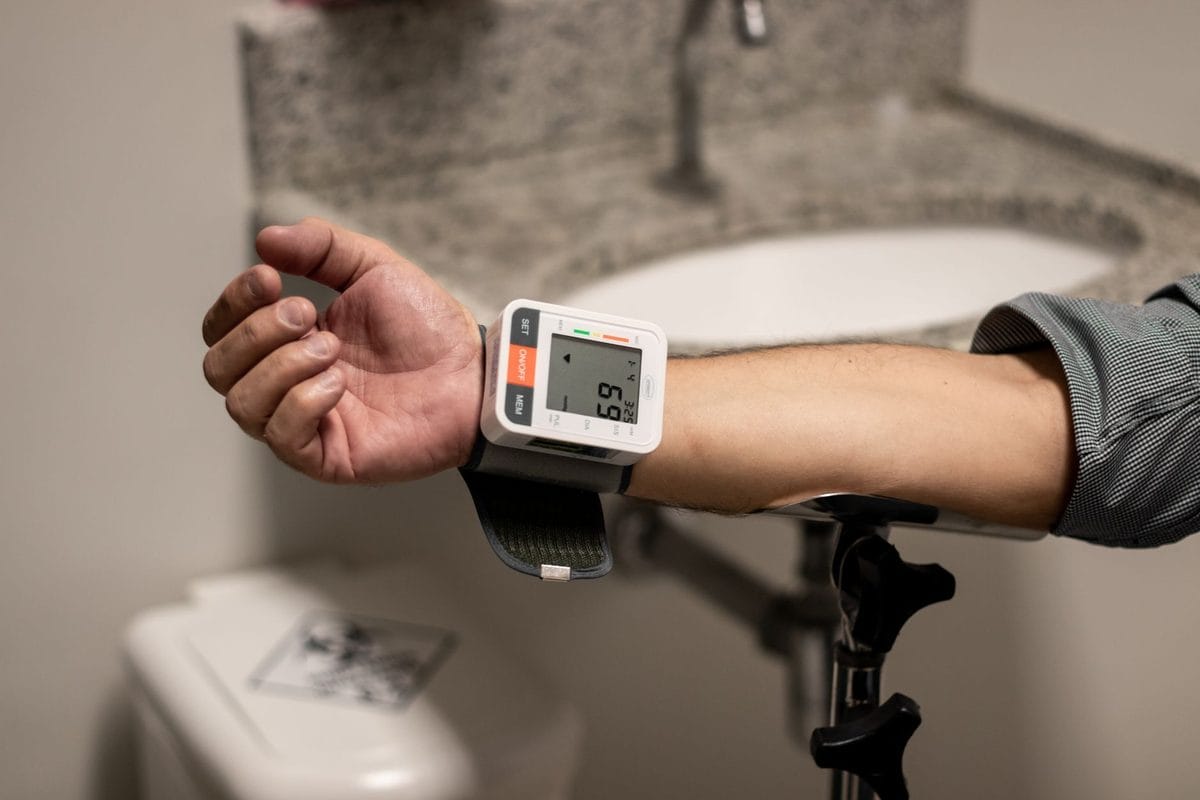
The thing about high blood pressure is that it feels like absolutely nothing. There's no ache, no warning, no Tuesday where you wake up and think "my arteries are under more strain than they should be." It runs quietly for fifteen or twenty years while you feel completely fine, and then one day it stops being quiet, and that day tends to be a stroke or a heart attack rather than a gentle nudge. Roughly half of American men have elevated blood pressure and a large share of them have no idea, because the only symptom of the most common version is having no symptoms at all.
The number, and what it means without the jargon
Blood pressure reads as two numbers — say 128 over 78. The top number, systolic, is the pressure in your arteries when the heart beats. The bottom, diastolic, is the pressure between beats while the heart refills. Under the current American Heart Association guidelines, normal is under 120/80. The 120–129 range over a sub-80 bottom number is "elevated" — not yet a diagnosis, but the on-ramp. Stage 1 hypertension starts at 130/80, and Stage 2 at 140/90. These thresholds got stricter a few years back, which means a number your father's doctor called fine might land you a diagnosis today.
Here is the part that catches men off guard: a single reading means very little. Blood pressure swings through the day, spikes when you're stressed or have just rushed in from the parking lot, and the "white coat" jump in a doctor's office is well documented. One scary reading at a clinic is not hypertension. A pattern of elevated readings, taken calmly at home over a couple of weeks, is the thing that actually tells you something. If you're going to take this seriously — and you should — take it seriously enough to measure it properly.
Measuring it right at home
A decent automatic upper-arm cuff costs about $40 and is a better health investment than nearly any supplement on the shelf. Wrist cuffs and the readings off most smartwatches are not reliable enough to make decisions on — use an upper-arm cuff. Sit for five minutes first, feet flat, back supported, arm at heart level, no coffee or cigarette in the prior half hour. Take two readings a minute apart, morning and evening, for a week. The average of that week is your real number. The one you got standing up after climbing the stairs is noise.
What actually moves it
The good news, and it's genuinely good, is that the levers that matter most are things you control directly. Salt gets the headlines, and cutting it helps some men a lot and others barely at all — sodium sensitivity varies, so it's worth testing on yourself rather than assuming. But the bigger movers for most men are weight, alcohol, and sleep, in roughly that order.
Dropping even ten pounds can pull the top number down by several points. Cutting alcohol matters more than men want to hear — the two-drink habit that feels harmless is one of the most reliable causes of elevated readings in otherwise healthy men, and a month off the booze will often drop the number visibly enough to startle you. And untreated sleep apnea, which is wildly common and badly underdiagnosed in men over 40, drives blood pressure up all night while you think you're resting. If your partner says you snore and stop breathing, the apnea and the blood pressure are very likely the same problem wearing two hats.
The exercise piece
Steady aerobic exercise — the kind where you're working but could still talk — lowers blood pressure reliably over a few months. So does regular resistance training, which used to be considered risky for hypertensives and no longer is, provided you're not holding your breath and grinding maximal singles. The combination beats either alone. You don't need to train like an athlete; you need to move with enough regularity that your cardiovascular system stays adapted to it. Thirty minutes most days does most of the work.
When it's time for a pill, and why that's not a failure
There's a stubborn streak in a lot of men that treats blood pressure medication as an admission of defeat, something to white-knuckle your way out of with willpower and clean eating. Sometimes the lifestyle changes are enough. Often, especially with a family history, they aren't — and refusing a cheap, well-understood, generic medication that prevents strokes is not toughness, it's just a worse bet dressed up as discipline. The drugs are some of the most studied compounds in all of medicine, they cost a few dollars a month, and they work. If your doctor recommends one after a real pattern of high readings, the strong move is to take it and keep doing the lifestyle work alongside. The silent number doesn't care how disciplined you feel. It only responds to what you actually do about it.