Temperature, Light, and CO2: The Three Bedroom Variables Most Men Ignore
Your mattress matters less than you think. The three environmental variables that actually dictate sleep quality — temperature, light, and CO2 — are cheap to optimize and most men never touch them.
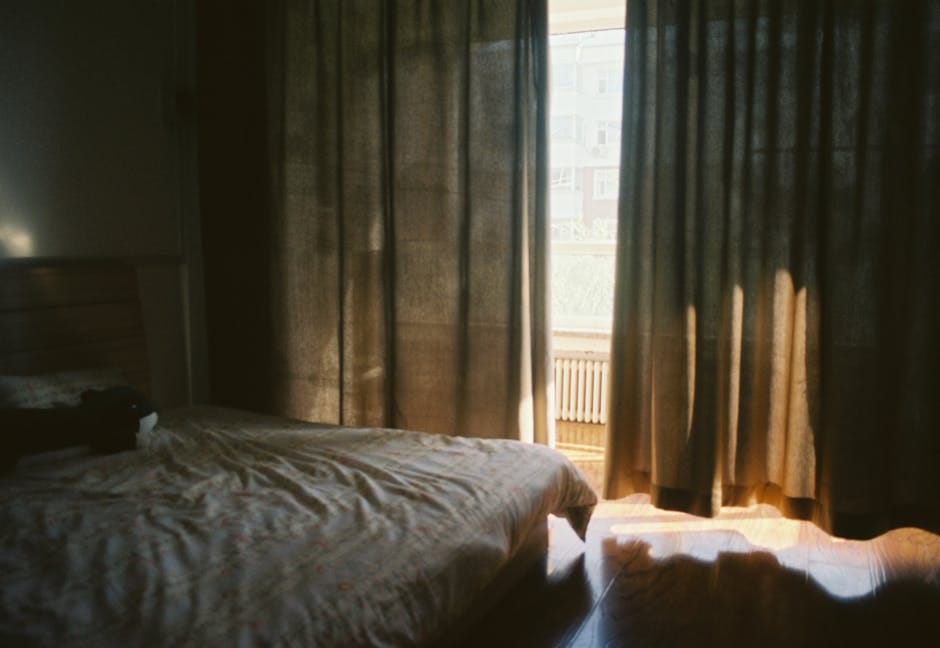
Men who spend $3,000 on a mattress and $500 on a smart tracker often sleep in bedrooms that are 75°F, illuminated by LED standby lights, with CO2 climbing past 1500 ppm over the course of the night. They optimize the expensive variables and ignore the cheap ones that actually matter more.
The three environmental variables with the biggest evidence-based impact on sleep quality — after the behavioral ones (timing, alcohol, caffeine) — are bedroom temperature, darkness, and air quality. Each has been studied extensively, each is cheap to fix, and each produces measurable improvements in sleep architecture.
Temperature: The 60-68°F Window
Your core body temperature drops during sleep, facilitated by peripheral vasodilation that releases heat through your skin. This thermoregulatory drop is essential for sleep onset and for maintaining deep sleep cycles. If your environment prevents effective heat dissipation, deep sleep suffers.
The research consensus: optimal bedroom temperature for most adults is 60-68°F (15.5-20°C). Below 60°F produces physiological stress (cold arousal, shivering); above 68°F impairs thermoregulation and sleep quality degrades rapidly.
A 2008 Brain study tracking sleep architecture across ambient temperatures found peak deep sleep percentage at 65°F. At 75°F, deep sleep was reduced by ~40% and REM by ~25%. At 80°F, sleep was fragmented to the point of being minimally restorative.
Practical implications:
- Set the bedroom to 65-67°F year-round (or ~18-19°C)
- In summer, use AC or fans; don't tough out hot bedrooms
- Cooling mattress covers (Eight Sleep Pod, ChiliSleep OOLER) work and are genuinely useful for hot sleepers
- Sleep naked or in minimal lightweight clothing in appropriate-temperature rooms
- Use breathable bedding; avoid heavy synthetic materials
- If your partner needs a warmer environment, consider dual-zone solutions
For men with hot-flush-type nighttime arousal — waking up sweating — this is almost always addressable with temperature management. The room is usually too warm; the fix is making it cooler, not sleeping with a fan blowing on your face at body temperature.
Light: Darkness Deeper Than You Think
Even small amounts of ambient light degrade sleep quality. The eyelid closure does not fully block light — photons pass through the eyelid and reach the retina, where they suppress melatonin and alert sleep-regulating areas of the brain.
A 2022 study from Northwestern found that sleeping with even moderate room light (100 lux — about the illumination from a nightlight or dim lamp) increased nighttime heart rate, impaired glucose tolerance the next morning, and blunted melatonin. Persistent light exposure during sleep is associated with increased obesity and type 2 diabetes risk in large epidemiological studies.
The sources of light you probably haven't accounted for:
- LEDs on electronics (TV standby, cable boxes, chargers, smoke detectors, laptops)
- Streetlights or security lights through thin curtains
- Moonlight on full-moon nights through windows
- Digital clocks with lit displays
- Neighboring buildings or parking lot lights
- Early morning light before your desired wake time
The fix:
- Blackout curtains — proper ones that block 95%+ of light. Around $50-100 per window.
- Tape or electrical tape over device LEDs (or relocate devices)
- Turn clocks to face away, or use clocks that dim in darkness
- Consider an eye mask if the room can't be fully darkened
- No screens in the bedroom, or at minimum dim them
The test: when you wake up at 3 am for the bathroom, look around. If you can see the room clearly, it's not dark enough. A properly dark bedroom should feel like a cave — almost disorienting how little you can see.
CO2: The Variable Nobody Measures
Human breathing produces CO2. In a closed bedroom, overnight accumulation can push CO2 from outdoor levels (~420 ppm) to 1500-2500 ppm by morning. At these concentrations, CO2 measurably impairs cognitive function and sleep quality.
A 2024 study published in Sleep examined sleep quality in bedrooms at different CO2 levels. Participants in rooms maintained below 1000 ppm had higher sleep efficiency, fewer awakenings, and better subjective sleep quality than those in rooms reaching 2000+ ppm. Subjective "stuffy room" feeling correlates with elevated CO2.
The problem: most modern homes have tight building envelopes and minimal bedroom ventilation. A couple sleeping in a 12×14 room with door closed and no ventilation will reach concerning CO2 levels within 3-4 hours.
How to fix:
- Crack a window. Even a small opening dramatically improves CO2. In moderate weather, this is the easiest fix.
- Keep the bedroom door open. Increases air volume and mixing. Simple, free, effective.
- Run HVAC fan continuously. Many systems default to "auto"; setting to "on" circulates air continuously.
- Consider ERV (energy recovery ventilator). In new or renovated homes, these systems bring in fresh air continuously. Gold standard for air quality.
- Measure CO2. A good CO2 meter costs $100-200 (Aranet4 is the consumer standard). Measure yours for a few nights. Most people are shocked.
Air Quality Beyond CO2
Particulate matter (PM2.5 and PM10) also affects sleep. Poor air quality from outdoor sources (wildfire smoke, pollution, traffic) or indoor sources (dust, mold, pet dander) contributes to fragmented sleep and morning congestion.
Practical air quality interventions:
- HEPA air purifier appropriately sized for the room (Coway, Levoit, Blueair)
- Replace HVAC filters on schedule (3-6 months)
- Mattress and pillow covers for dust mite allergies
- No humidifiers in rooms with mold history
- If outdoor air is poor (wildfire season, pollution spikes), close windows and rely on filtration
Humidity
40-60% relative humidity is the sleep-friendly range. Below 40%, dry air irritates airways; above 60%, it feels stuffy and promotes mold growth and dust mites. Most modern homes in winter run too dry (15-25%) and need humidification; in summer, air conditioning usually handles humidity adequately.
A simple hygrometer ($15) tells you where you stand. Humidifiers (ultrasonic or evaporative) fix low humidity; dehumidifiers or AC fix high humidity. Not transformative like temperature or darkness, but contributes to comfort.
Noise
Below 40 dB for continuous background noise is the sleep-friendly target. Sudden peaks matter more than steady hum — a single 55 dB noise can fragment sleep even if the room is generally quiet.
Fixes:
- White noise machine (masks intermittent sounds with steady ambient noise)
- Earplugs (silicone reusable, or foam disposable — do a 30-day trial to see if they're useful)
- Address the source (fix a dripping faucet, talk to neighbors about audible TV, etc.)
- Heavy curtains also absorb some sound
The Cheap Overhaul
Most bedrooms can be meaningfully optimized for under $200:
- Blackout curtains: $50-100
- CO2 meter: $100-200
- Room thermometer/hygrometer: $15
- Earplugs or eye mask: $10-30
- Smart thermostat programming (if you have one): free
- Tape over LEDs: free
- Crack the window / open the door: free
The effect size from environmental optimization often exceeds supplements, trackers, or sleep-hygiene apps. A properly cool, dark, ventilated bedroom produces measurable improvements within days.
The Priority Order
If you're going to attack bedroom environment, start with the variables that matter most:
- Temperature. 65-67°F. Adjust whatever it takes.
- Darkness. Blackout, cover LEDs, eye mask if needed.
- Airflow. Window cracked or door open; measure CO2 to verify.
- Noise. Address if actively disruptive.
- Humidity. Keep in range; address only if clearly off.
Get these right and the mattress question matters marginally. Get these wrong and the best mattress in the world is mitigating, not optimizing.