The Cardiovascular Tests You Should Have Before 40
Most men don't know they have heart disease until they have a heart attack. These tests catch it years earlier, when you can actually do something about it.
Men have heart attacks at 48 for reasons that were visible 15 years earlier if anyone had been looking. The problem isn't that medicine can't detect early cardiovascular disease — it can, reliably, with tests that cost a few hundred dollars. The problem is that the annual physical doesn't order them, and most men don't know to ask.
The tests below, ordered roughly in descending order of evidence-based value, catch cardiovascular problems at stages when they're reversible, slowable, or treatable. Most men over 40 should have had most of these. Most haven't had any of them.
Coronary Artery Calcium Scan (CAC)
What it is: A specialized low-dose CT scan of the heart. Takes about 10 minutes. Measures calcification in your coronary arteries, which is effectively a snapshot of accumulated atherosclerotic plaque over your lifetime.
What the score means:
- 0: No detectable calcified plaque. Excellent. Cardiovascular event risk very low for the next 10 years.
- 1-100: Mild plaque. Elevated risk vs. zero but still moderate.
- 100-400: Moderate plaque. Substantially elevated risk.
- Over 400: Extensive plaque. High risk, aggressive management warranted.
The CAC score is arguably the single most informative cardiovascular test available. It measures actual disease, not risk factors. A CAC of 0 reassures beyond what any blood work could — you have no calcified plaque, your 10-year risk is genuinely low. A CAC of 200 tells you the disease is present and advancing, independent of what your other markers look like.
When to get it: Men 40-45 for baseline; earlier (35-40) if family history, elevated Lp(a), or multiple risk factors. Retest every 3-5 years if initial scan showed any calcium.
Cost: $100-400 depending on location. Often not covered by insurance but direct-to-consumer radiology makes it affordable. HeartScanMan, individual hospital programs, and direct-pay radiology often offer CAC for $100-200.
Radiation: Roughly 1 mSv — equivalent to 2-3 months of background radiation or one transcontinental flight. Minimal.
VO2 Max (Cardiopulmonary Exercise Test)
What it is: Measures your maximum rate of oxygen consumption during graded exercise. Tests aerobic fitness directly, via a mask-based metabolic cart while you pedal or run to exhaustion.
Why it matters: VO2 max is one of the strongest predictors of all-cause mortality. In a major 2018 JAMA Network Open study, each increase of one metabolic equivalent (MET) in treadmill testing was associated with 12% lower all-cause mortality. Men in the top 20% of VO2 max for their age had roughly 50% lower all-cause mortality than men in the bottom 20% — effect size larger than statins, larger than quitting smoking.
Target ranges (ml/kg/min):
- Men 30-40: 40+ is above average; 50+ is excellent
- Men 40-50: 35+ is above average; 45+ is excellent
- Men 50-60: 30+ is above average; 40+ is excellent
Most sedentary middle-aged men have VO2 max in the 25-32 range. Training Zone 2 cardio consistently can raise this 15-30% over 12 months.
Cost: $150-400 direct-to-consumer. Available at hospital exercise labs, some gyms (University athletic departments, specialized performance centers), and direct-to-consumer services.
Frequency: Every 1-2 years to track fitness trajectory. More frequently if actively training for improvement.
Carotid Intima-Media Thickness (IMT)
What it is: Ultrasound of the carotid arteries in your neck, measuring the thickness of the vessel wall. Radiation-free.
Why it matters: Thickening of the carotid wall reflects systemic vascular aging. Can detect early atherosclerotic changes before calcification (pre-CAC disease) and provides visualization of actual plaques if present.
When to get it: Complementary to CAC. Especially useful for younger men (under 40) where CAC might be zero but vascular aging is beginning. Also useful for tracking regression on therapy.
Cost: $100-300. Less commonly available direct-to-consumer but offered by some cardiology clinics.
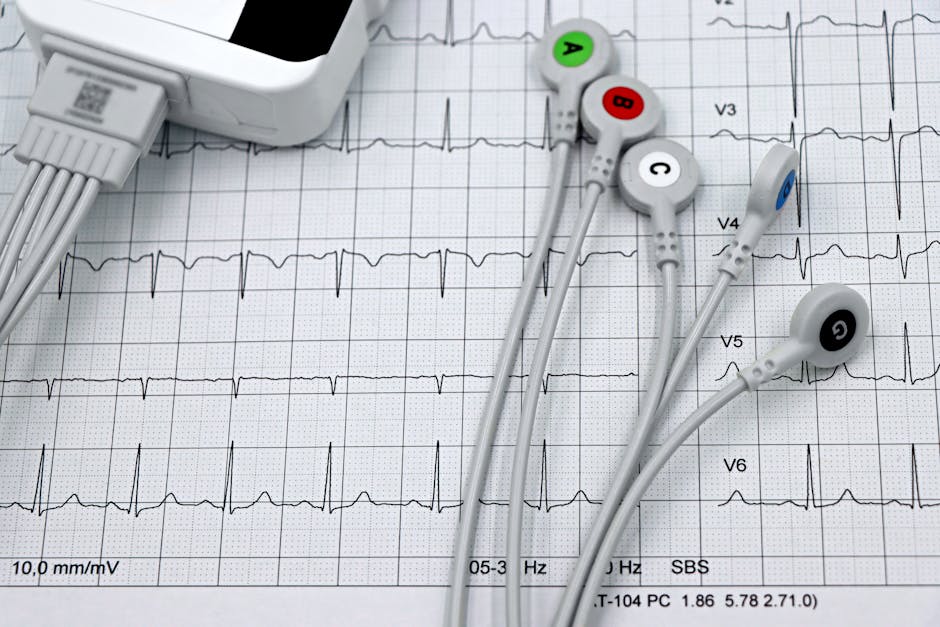
ECG / EKG with Interpretation
What it is: Electrical activity of the heart measured by skin electrodes. 12-lead standard is routine.
Why it matters: Catches arrhythmias (atrial fibrillation, long QT, right or left bundle branch blocks), evidence of prior silent MI, and left ventricular hypertrophy. A resting ECG is cheap and basic, but provides diagnostic value.
When: Baseline at 35-40, or with any cardiovascular symptoms. Not typically repeated annually unless problems are identified.
Cost: $50-150.
Stress Test
What it is: Graded exercise while ECG is monitored, with or without imaging (echo, nuclear, cardiac MRI).
Why it matters: Reveals ischemia under demand that isn't apparent at rest. Part of standard workup when there's concern or symptoms.
When: Not routine screening for asymptomatic men; indicated with chest discomfort, abnormal resting ECG, or after CAC reveals significant disease.
Cost: Varies widely — $300 for basic treadmill stress test, $1500+ for nuclear or stress MRI. Usually ordered through cardiology.
Echocardiogram
What it is: Ultrasound of the heart structure and function. Measures ejection fraction, chamber sizes, valve function, wall thickness.
Why it matters: Detects structural problems (hypertrophy, valvular disease, regional wall motion abnormalities from prior infarction) that blood tests can't see.
When: Not routine screening unless specific concerns. Consider baseline at 45-50 if family history or other risks warrant.
Cost: $250-800 depending on setting.
Ankle-Brachial Index (ABI)
What it is: Ratio of blood pressure at the ankle to blood pressure at the arm. Screens for peripheral arterial disease.
Why it matters: PAD is often asymptomatic in early stages but reflects generalized atherosclerosis and is associated with substantially elevated cardiovascular mortality.
When: Screening recommended starting 50-55 in men with any cardiovascular risk factors, earlier if family history.
Cost: Often done at vascular surgery or cardiology offices; usually $100-200 as a screening test.
High-Sensitivity Troponin (If Acutely Concerned)
What it is: Blood test detecting heart muscle damage at very low levels.
When: Not a screening test — used when acute coronary syndrome is suspected. Mentioned here for awareness: if you have concerning chest symptoms, ER troponin is the test that rules in or out acute cardiac damage.
Blood Pressure: The Test You Skip
Measured in your doctor's office once a year, blood pressure is probably the most underutilized readily-available cardiovascular test. Office BP measurements miss white-coat hypertension (falsely high) and masked hypertension (falsely normal).
Get a home BP monitor ($30-50 for good automatic upper-arm cuffs). Measure in the morning before coffee, 3 times over a week. If systolic averages over 130 or diastolic over 80, you have stage 1 hypertension by current US guidelines.
Also consider 24-hour ambulatory blood pressure monitoring occasionally, which catches patterns office BP misses (nighttime dipping, daytime variability). Available through some cardiology clinics for $150-300.
The Practical Sequence
For a man in his late 30s or early 40s with no known cardiovascular disease, a reasonable first cardiovascular workup:
- Comprehensive blood panel including ApoB, Lp(a), hsCRP, fasting insulin, HbA1c
- Home blood pressure monitoring (one-time investment; ongoing data)
- Baseline ECG
- CAC scan
- VO2 max test (if training or curious about fitness)
Total cost, paying out of pocket: $600-1200 for everything. Through insurance with appropriate clinical justification, much less.
If CAC is 0 and blood work is clean, you don't need to do this again for 3-5 years. If CAC is elevated or blood work shows issues, you have actionable information and a reason to engage more aggressively with prevention.
Why Most Men Don't Get These
Screening doesn't pay well in a fee-for-service healthcare system that's better at treating acute events than preventing them. Primary care visits are 15 minutes. The comprehensive cardiovascular evaluation described above takes multiple visits and multiple specialists to arrange through the insurance-driven system.
The practical path is to take it on yourself. Schedule direct-to-consumer labs. Drive to a hospital-based CAC scan with self-pay pricing. Get your own ECG at an urgent care or preventive clinic. Build the data set, then discuss it with your primary care or a preventive cardiologist.
Your doctor isn't withholding these tests maliciously. The system isn't designed to offer them routinely. You have to ask for them, and often you have to pay for them yourself. The cost is low for the information gained. The cost of not having the information — a cardiovascular event at 52 that could have been prevented at 40 — is very high.