CAC Scan Explained: The $100 Test That Could Save Your Life
A single 10-minute CT scan tells you whether you already have heart disease. Most men have never heard of it. Here's what CAC scoring actually does.
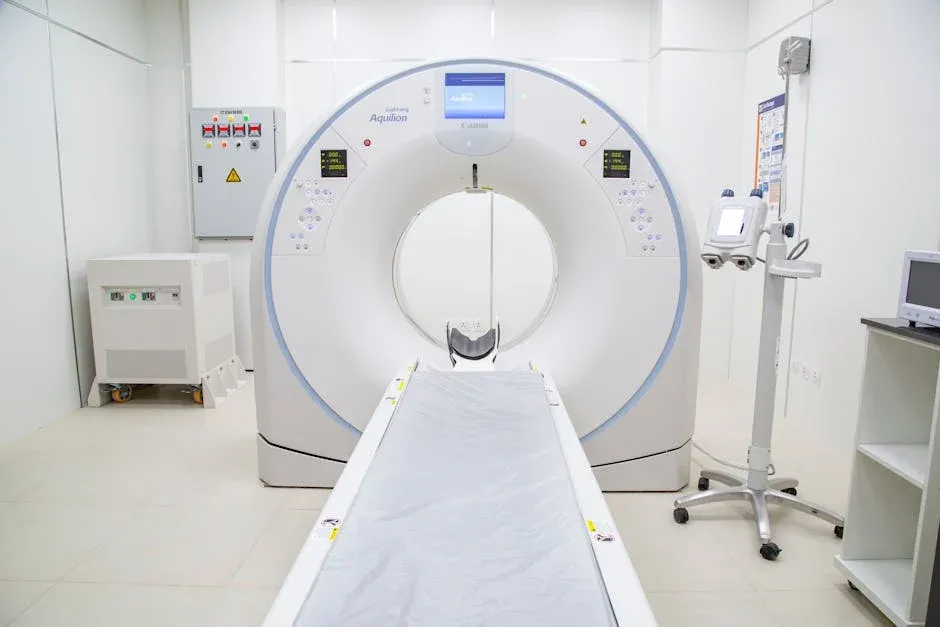
Your cholesterol numbers are estimates of risk. Your CAC score is a direct measurement of disease. That distinction is worth understanding before you interpret either.
Coronary artery calcium scoring — a specialized low-dose CT scan that quantifies calcified plaque in your heart's arteries — is arguably the most informative single cardiovascular test available to asymptomatic men. It tells you, with high accuracy, whether you already have atherosclerotic disease, how much, and what that means for your next decade of risk.
Most men have never heard of it. Most doctors don't order it without prompting. It costs $100-400 out of pocket. The information it provides changes management in roughly 30-40% of cases.
What the Scan Actually Shows
Atherosclerosis develops over decades. Early plaques are "soft" — composed of cholesterol, inflammatory cells, and fibrous tissue. As plaques mature, calcium deposits in them, creating the "hard" calcified plaques that a CT can detect.
The presence of calcified plaque is a specific marker of established atherosclerotic disease. You don't have calcified plaque unless you've been developing atherosclerosis for years. Zero calcium means the process hasn't advanced meaningfully — your arteries are, essentially, in good shape.
The Agatston score quantifies this:
- 0: No detectable calcified plaque
- 1-10: Minimal plaque (trace)
- 11-100: Mild plaque
- 101-400: Moderate plaque
- Over 400: Extensive plaque
The score is calculated from the density and volume of calcified areas in the coronary arteries. It's reproducible — the same patient measured at two labs will get substantially similar scores.
How the Score Maps to Risk
Large population studies (MESA being the gold standard) have tracked cardiovascular outcomes across CAC scores for decades. The mapping is clean:
- CAC 0: Roughly 1-2% 10-year cardiovascular event rate. Extremely low.
- CAC 1-100: 3-7% 10-year event rate depending on age and other factors.
- CAC 101-400: 10-15% 10-year event rate.
- CAC over 400: 20%+ 10-year event rate. Many guidelines consider this "coronary artery disease equivalent" in terms of aggressive management.
For perspective: a 50-year-old man with "normal" standard risk factors typically has an estimated 10-year event risk of 5-10% by Framingham or ASCVD calculators. His CAC reveals his actual risk — which might be 2% (CAC 0, reassuring, possibly lower than his calculator) or 15% (CAC 250, concerning, higher than his calculator suggested).
The Age-Adjusted Percentile Matters Too
A CAC of 50 in a 65-year-old is average; in a 35-year-old it's alarming. The interpretation should consider your age percentile.
MESA publishes percentile tables. A CAC above the 75th percentile for your age indicates accelerated atherosclerosis relative to peers. Above the 90th percentile is significantly above expected.
A CAC of 0 is always good, regardless of age. But the informational value of zero is highest in older men — a 60-year-old with CAC 0 is in remarkably good cardiovascular shape for his age.
What a Non-Zero Score Means for Management
A CAC above 100 is the threshold at which most guidelines favor aggressive cardiovascular management — typically statin therapy with an LDL-C target under 70 mg/dL (or ApoB under 65). Many clinicians now advocate similar aggression at lower thresholds (CAC 50+) given the strong evidence base.
A CAC of 200 warrants:
- Statin or combination lipid therapy targeting ApoB well under 80
- Blood pressure optimization (target under 120 systolic in most patients)
- Glucose/insulin optimization if any metabolic concerns
- Low-dose aspirin consideration (evidence-based in this setting)
- Smoking cessation if applicable (obvious)
- Weight management if applicable
- Regular reassessment, potentially retesting CAC in 3-5 years
The intervention isn't dramatic — it's optimization of standard cardiovascular prevention, but pursued more aggressively than it would be without the information that disease is demonstrably present.
Can You Reverse Calcified Plaque?
Mostly no. Calcified plaque tends to remain or progress slowly even with therapy. What treatment does is stabilize existing plaque (reducing rupture risk, which is what causes heart attacks) and slow or halt progression. New plaque formation decreases. Some soft plaque may regress. Calcium specifically tends to stay.
Paradoxically, some studies show CAC scores actually increase on statin therapy — because statins convert soft (rupture-prone) plaque to calcified (stable) plaque. The score may rise while actual risk decreases. This is why serial CAC tracking isn't always a clean "treatment is working" signal.
More informative for tracking response: CT angiography (CCTA) which quantifies both calcified and soft plaque, or specialized techniques like plaque burden analysis. More expensive and not routine.
Who Should Get a CAC
Strong consideration at any age if:
- Family history of early cardiovascular disease (first-degree relative before 55 for men, 65 for women)
- Elevated Lp(a)
- Diabetes, pre-diabetes, or insulin resistance
- Multiple risk factors stacking up
- Uncertainty about whether to start statin therapy (CAC resolves the question)
For men without these risk factors:
- Baseline CAC at 40-45 is reasonable
- Earlier (35-40) if any concerning factors
- Not indicated under 30 except in unusual circumstances
For women the timing is typically 10 years later due to different disease trajectory.
The Retest Question
Retest frequency depends on initial score:
- CAC 0: Retest in 5-10 years. Zero at baseline is strongly predictive of continued low risk.
- CAC 1-100: Retest in 3-5 years
- CAC 100-400: Retest in 3-5 years, or focus on treatment and don't retest; the treatment is indicated regardless
- CAC over 400: No need to retest for risk stratification; aggressive management is the answer
The "warranty period" for CAC of 0 is roughly 5-10 years depending on risk factor profile. Adding new risk factors (developing diabetes, major weight gain) shortens that period.
How to Actually Get One
Most hospital radiology departments offer CAC scans. Some require a physician order; many offer direct-to-consumer self-pay.
Pricing:
- HeartScan Mobile / Heart Scan Home Delivery services: $99-149
- Hospital self-pay cash price: $100-400 depending on region
- Through insurance: variable; often not covered unless specific indications
Online resources like CT Calcium Scoring Alliance or local hospital marketing list directly-to-consumer options. No referral needed at most direct-pay centers.
The process: you arrive, fill paperwork, get on the scanner for 5-10 minutes, leave. No IV, no contrast, no fasting. You'll have results within a few days, sometimes same day.
The Value Proposition
A CAC scan costs roughly what one nice dinner for two costs. It provides information that potentially changes your next 30 years of cardiovascular management. For men in the 40-60 age range, it's one of the highest-value per-dollar tests in all of preventive medicine.
If you're on the fence about whether to start statin therapy, a CAC often resolves the question definitively. If your family history is uncertain, a CAC tells you whether the inherited risk is manifesting in you specifically. If you want peace of mind, a zero CAC provides it more reliably than any other test.
Talk to your doctor about whether it's right for your specific case, but for most men over 40 without prior cardiovascular workup, the answer is probably yes.