Free T vs Total T: Why Most Men Test the Wrong Number
You walk out of the doctor's office with a 'normal' testosterone result and still feel like you're running at 60%. The test measured the wrong thing.
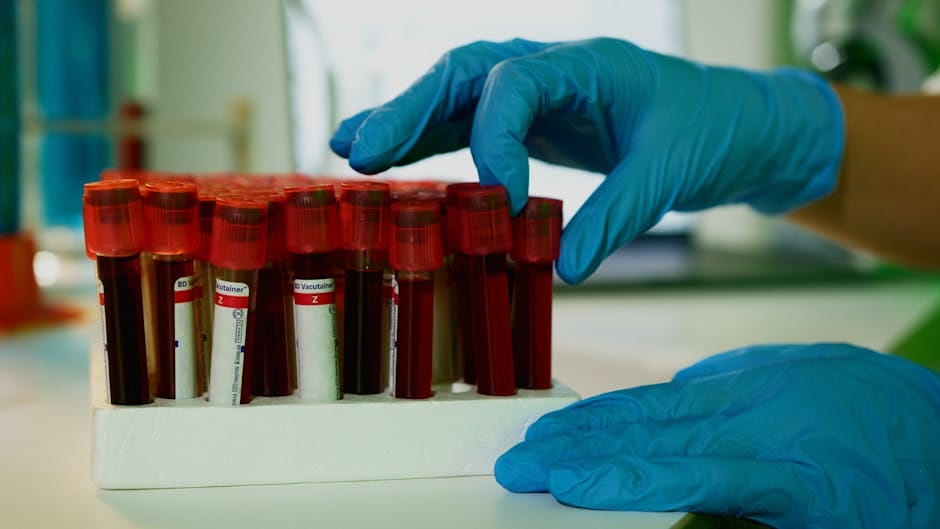
A lab report says your testosterone is 550 ng/dL. Right in the middle of the normal range. The doctor shrugs. You walk out still exhausted, still losing muscle, still watching your libido evaporate — and everyone keeps telling you your numbers are fine.
The numbers aren't lying. The test was.
Standard testosterone panels measure total testosterone — every molecule of T in your blood, whether it's actually doing anything or not. The problem: most of it isn't doing anything. Somewhere between 98% and 99% of circulating testosterone is bound to carrier proteins, mostly sex hormone-binding globulin (SHBG) and albumin. Bound testosterone is not biologically active. It can't enter cells, bind receptors, or produce any of the effects you care about.
Only the free and loosely-bound fraction — what clinicians call "bioavailable testosterone" — actually does work in your body. And this is the number that decides how you feel.
The SHBG Problem Nobody Warns You About
SHBG rises with age in many men, driven by factors like hyperthyroidism, liver disease, low insulin, and certain medications including anticonvulsants. When SHBG goes up, it grabs more testosterone and refuses to let go. Your total T can look perfectly respectable while your free T is collapsing.
This is why a 50-year-old with SHBG of 85 nmol/L and total T of 600 ng/dL can be functionally hypogonadal. His free T is probably around 7-9 ng/dL — well below the threshold where symptoms appear. A 50-year-old with SHBG of 30 and the same total T of 600 has free T around 14-16 ng/dL. Two identical total testosterone readings, two completely different clinical realities.
The reverse also happens. Obesity, insulin resistance, and hypothyroidism can drive SHBG down. A young obese man with SHBG of 15 and total T of 400 ng/dL will have free T that's adequate (around 11-12 ng/dL) despite the unimpressive total. He doesn't need TRT — he needs to lose weight.
Why Your Doctor Didn't Order Free T
Direct free testosterone assays are technically harder to run and historically were less reliable. Many doctors still operate on guidelines from a decade ago when total T was considered the gold standard. Some endocrinologists prefer calculated free T, derived from total T + SHBG + albumin using the Vermeulen equation — which is actually quite accurate and what most modern specialists recommend.
But a typical primary care visit won't go deeper than total T. If you have symptoms, you need to ask — by name — for:
- Total testosterone (LC-MS/MS preferred)
- SHBG
- Albumin
- Free testosterone (calculated or measured via equilibrium dialysis)
With those four, you get the real picture. Without them, you get a number that may or may not correspond to what's happening in your cells.
What the Actual Thresholds Are
Free testosterone reference ranges vary slightly by lab and method, but for adult men:
- Optimal: 15-30 ng/dL (roughly 150-300 pg/mL)
- Borderline low: 10-15 ng/dL
- Clinically low: below 10 ng/dL (or below 6.5 pg/mL in pg/mL units — watch the conversion, labs report both)
The symptom threshold tends to sit around 12 ng/dL for most men. Below that, you'll notice. The Baltimore Longitudinal Study of Aging tracked men over decades and found that crossing below 10 ng/dL correlated strongly with reported sexual dysfunction and fatigue, even when total T was in range.
SHBG Manipulation: Is It a Thing?
Kind of, with caveats. Lowering high SHBG isn't a well-trodden clinical path. Interventions that modestly lower SHBG:
- Gaining body fat (effective, but counterproductive for every other reason)
- Higher protein intake (mild effect)
- Boron supplementation (weak evidence, 10 mg/day)
- Stinging nettle root (very weak evidence, mostly in vitro)
- Resistance training (modest, long-term)
Interventions that can lower SHBG dramatically — insulin-raising diets, losing thyroid function — are not health interventions. They trade SHBG reduction for other problems. Nobody's lowering SHBG safely and meaningfully by drinking herbal tea.
The better approach: if SHBG is driving your problem, address the real cause. Hyperthyroidism needs treatment anyway. Alcoholic liver disease needs treatment anyway. Medications (especially anticonvulsants and some oral contraceptives in younger patients) may have alternatives.
The Underrated Variable: Albumin
Albumin binds testosterone loosely. Unlike SHBG, this bond can release T to target tissues when needed. Low albumin — seen in chronic inflammation, malnutrition, severe liver disease — reduces your effective bioavailable testosterone even further.
A man with decent total T and decent SHBG but albumin of 3.4 g/dL (low-normal) is walking around with less bioavailable hormone than his numbers suggest. This is rare in healthy men but worth checking in anyone with chronic disease or unexplained symptoms.
How to Read Your Own Lab Report
Here's a simple test: given total T and SHBG in standard units, calculate the approximate free T percentage.
A rough rule: free T percentage ≈ 2.5% when SHBG is around 30 nmol/L. Every 10 nmol/L increase in SHBG drops free T percentage by roughly 0.3 percentage points. If your total T is 600 ng/dL and SHBG is 60, free T is roughly 1.9% × 600 = 11.4 ng/dL. Borderline.
Better: use an online Vermeulen calculator. Enter total T, SHBG, and albumin, get back calculated free T with proper math. Half the clinical calculators on the internet use this equation; the results are accurate to within the margin of direct measurement.
Treatment Implications
Here's where this matters. A man with low total T and low SHBG often doesn't need TRT — treating the underlying cause (obesity, diabetes, thyroid) may restore both. A man with normal total T but high SHBG and low free T might benefit from TRT more than his total number suggests. And a man with adequate free T despite borderline total T probably doesn't need intervention regardless of symptoms.
Good endocrinologists treat free T and symptoms, not total T in isolation. The mediocre ones look at one number and prescribe accordingly. You can tell them apart in the first visit by whether they order the full panel without being asked.
One More Thing: Test Timing and Fasting
SHBG responds to insulin. A non-fasting morning draw after a big breakfast can show SHBG 10-15% lower than fasting. Total T doesn't swing much with food, but SHBG does. For consistency, fast 10 hours before the test, draw between 7 and 10 a.m., and repeat under the same conditions if you're comparing numbers over time.
The extra hour of coffee-first-thing hunger you lose is worth it for usable data. Random afternoon non-fasting draws are why so many men end up with contradictory results and mysterious "fluctuating" testosterone. They're not fluctuating — the measurements are noise.
The Bottom Line
Total testosterone alone is the first page of a five-page report. SHBG, albumin, and calculated free T fill in the story. If your doctor ran only total T and called it a day, either ask for the rest or go direct to a lab (Quest Diagnostics, Labcorp, Marek Health) and pay $150 for the complete panel. Talk to your doctor about what the results mean for you specifically, because none of this substitutes for clinical judgment — but walk in with the numbers that matter.