The Testosterone Decline After 30: What's Normal, What's Not
Most men lose about 1% of testosterone per year after 30. The problem: standard lab ranges are too wide to catch real decline.
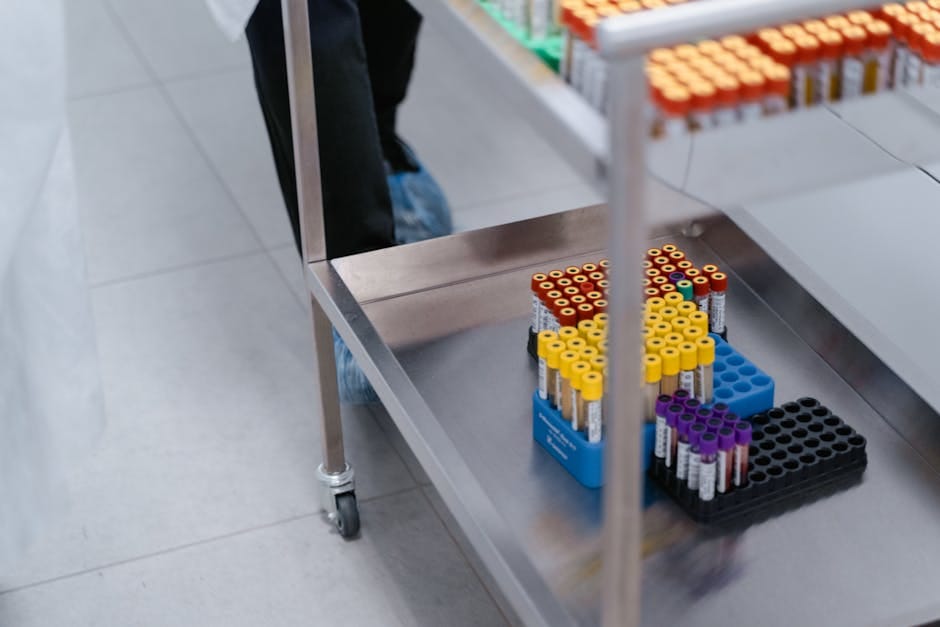
Your testosterone started dropping around age 30 and it hasn't stopped. That's biology — roughly 1% per year for most men, sometimes faster. But here's the part your doctor isn't telling you: the "normal" range printed on your lab sheet runs from 264 to 916 ng/dL, and that range is completely useless for deciding whether you actually have a problem.
A 35-year-old at 300 ng/dL will read "within normal range" on a standard blood panel. He will also be tired, mentally foggy, and losing muscle he used to build easily. Meanwhile a 55-year-old at 600 ng/dL shows up perfectly fine by the same report. The lab didn't make an error. The range just wasn't designed for individual men — it was built from population data that lumps 20-year-olds with 80-year-olds.
What the Actual Numbers Mean
For a man under 40, total testosterone below 400 ng/dL is a red flag regardless of what the lab flags as "low." The Endocrine Society's clinical guidelines recommend treating symptomatic men below 300 ng/dL — but the symptom threshold and the intervention threshold are not the same. You can feel like garbage at 380.
More useful: track the trajectory. If you've dropped from 650 to 420 over five years, that's a 35% decline. A static snapshot won't catch it.
- Optimal for performance (30s-40s): 550-900 ng/dL total, with free testosterone above 15 ng/dL
- Watch zone: 400-550 ng/dL — symptomatic investigation warranted
- Clinically low: below 300 ng/dL, with confirmed second morning draw
The "confirmed second morning draw" part matters. Testosterone fluctuates within a single day by up to 30%. A one-time afternoon test is effectively random noise. Get drawn between 7 and 10 a.m., and repeat the test two to four weeks later before concluding anything. The 2018 American Urological Association guideline explicitly requires two morning measurements before diagnosing hypogonadism.
The Symptoms Everyone Gets Wrong
Fatigue, brain fog, low libido — yes, these show up with low T. But they also show up with poor sleep, elevated cortisol, subclinical hypothyroidism, iron deficiency, or just being 42 and overworked. Men diagnose themselves with low T based on symptoms that actually point at sleep apnea.
Symptoms that are more specific to actual testosterone deficiency:
- Loss of morning erections (the single most specific clinical marker)
- Measurable muscle mass loss despite consistent training
- Dramatic drop in libido that's not tied to relationship or stress issues
- Hot flashes (yes, men get them — rare but specific)
- Lost of body hair, shrinking testes (advanced cases)
Notice the frame. It's not "I feel tired sometimes." It's structural changes you can actually measure or observe over months.
What to Order From Your Doctor
A basic testosterone test is a starting point, not an answer. To get a real picture, request the full panel:
- Total testosterone (LC-MS/MS method if available — more accurate than immunoassay at low levels)
- Free testosterone (calculated or direct — the biologically active fraction)
- SHBG (binds T; if high, free T is low even when total looks fine)
- Estradiol (sensitive assay — not the standard one)
- LH and FSH (distinguishes primary from secondary hypogonadism)
- Prolactin (elevated = pituitary problem, rules out tumor)
The full panel runs $150-250 through direct-to-consumer labs like Quest or Labcorp without insurance. Through a primary care doctor with proper coding, it's often fully covered. Request the codes: 84403 (total T), 84270 (SHBG), 82670 (sensitive estradiol).
Primary vs. Secondary: The Distinction That Changes Treatment
If your testes aren't producing T, that's primary hypogonadism — LH and FSH will be elevated because your pituitary is screaming at testes that can't respond. Causes: prior injury, varicocele, genetic conditions, aging.
If your brain isn't sending the signal, that's secondary hypogonadism — LH and FSH will be low or inappropriately normal despite low T. Causes: obesity, sleep apnea, chronic stress, opioid use, pituitary tumors.
This distinction matters because secondary hypogonadism is often reversible. Lose 20 pounds of visceral fat, treat your sleep apnea, and your pituitary starts functioning. Men rush to TRT when they haven't fixed a CPAP-treatable sleep disorder first. A 2013 study in the European Journal of Endocrinology found that treating moderate-to-severe sleep apnea with CPAP raised morning testosterone by 15-25% in six months.
The Obesity Connection
Adipose tissue converts testosterone to estradiol via aromatase. The more body fat you carry, particularly visceral fat around the organs, the more testosterone leaks out of your system. A 2012 study in Clinical Endocrinology documented that men who lost 17% of their body weight raised total testosterone by an average of 100 ng/dL.
This is the most underrated intervention in male health. Before considering TRT, before buying supplements, if you're carrying significant body fat, losing it often fixes the numbers. The reverse is also true: TRT without addressing underlying obesity tends to be a treadmill you can't step off.
What Actually Moves the Needle
Strength training. Compound lifts — squats, deadlifts, presses — at heavy loads produce measurable acute testosterone responses, and over months, sustained improvements in baseline. The effect is modest (maybe 10-15%), but consistent. Cardio alone does not do this. In fact, excessive endurance training can actively lower testosterone; chronic runners often have lower T than sedentary controls.
Sleep. Men who sleep 5 hours show testosterone levels 10-15% lower than when they sleep 8. One week of restricted sleep ages your endocrine profile by about a decade. This is not a marginal effect.
Alcohol. Three or more drinks suppress testosterone production for the next 24 hours. Chronic heavier drinking lowers baseline permanently. No supplement will rescue this.
Zinc and vitamin D deficiency. Both cofactors for testosterone synthesis. Deficient men respond to supplementation; already-replete men don't. Test first, don't guess.
What Doesn't Work
Testosterone-boosting supplements sold over the counter are almost universally useless. Tribulus terrestris shows zero effect in controlled trials. Fenugreek shows small, inconsistent effects. D-aspartic acid raised T modestly in some studies but not others. The entire "natural T booster" industry is a multi-billion-dollar waste.
Testofen, ZMA, horny goat weed, deer antler velvet — these move laboratory numbers by rounding error if at all. If a supplement actually raised testosterone the way the bottle claims, it would be a regulated drug.
When TRT Is Actually the Answer
For a subset of men — confirmed persistent low levels, clear symptoms, lifestyle factors addressed, and a proper evaluation for causes — testosterone replacement is legitimate medicine. It's not a lifestyle enhancer; it's a treatment for a diagnosable condition.
The risks are real but smaller than they used to seem. The 2023 TRAVERSE trial in the New England Journal of Medicine — over 5,000 men followed for a mean of 21.7 months — found no increased cardiovascular risk in TRT vs placebo among men with confirmed low T. Older studies that suggested heart risk were methodologically weaker.
But TRT is lifelong once you start. Your own production shuts down. Fertility drops. Red blood cell count rises (requires monitoring). It's not a casual decision.
Talk to an endocrinologist, not a "men's clinic" that prescribes TRT to every walk-in. The clinics that bill $300 a month for injections with no real workup are selling you a subscription to a hormone, not treating a condition.
What to Actually Do Next
If you're over 35 and haven't measured your testosterone, get it measured. Two morning draws, full panel. Look at the numbers in context of your own trajectory, not the lab's universal range. Address the obvious lifestyle drivers first — sleep, weight, alcohol, training, stress — and retest in six months.
Don't medicalize normal aging. A 45-year-old is not supposed to have the hormones of a 22-year-old. But also don't accept real symptomatic deficiency as inevitable. The difference is clarity about your own numbers, not a forum's opinion about what you should feel.