The Hepatitis B Vaccine Most Men Never Got — And Why It Still Matters at 40
Hepatitis B vaccination only became routine for UK babies in 2017, which leaves most men over 30 unprotected. Catching up takes three jabs and a short conversation with your GP.
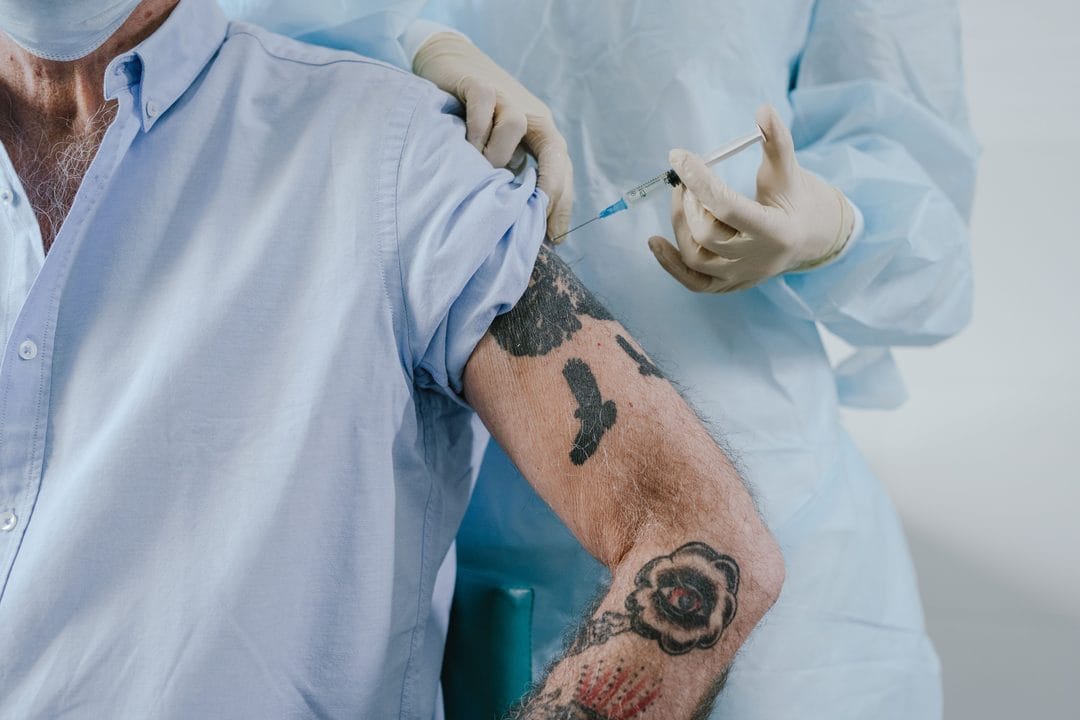
Most men in their thirties and forties walk out of a travel clinic or a routine GP appointment assuming their childhood vaccinations covered everything worth covering. For hepatitis B, that assumption is usually wrong. The UK only added the hepatitis B vaccine to the routine infant schedule in August 2017, as part of the 6-in-1 jab given at eight, twelve and sixteen weeks. Anyone born before that date — which is to say, almost every adult reading this — was never offered it as a matter of routine, and unless something specific triggered a catch-up dose, that gap has likely never been closed.
Hepatitis B is a viral infection that attacks the liver, and it spreads through blood and certain other bodily fluids — shared needles, unprotected sex, and less commonly through razors or toothbrushes contaminated with infected blood. Most adults who catch it clear the infection within six months and never know it happened beyond a rough few weeks of fatigue and nausea. The minority who don't clear it become chronic carriers, and chronic hepatitis B is one of the leading global causes of cirrhosis and liver cancer — the World Health Organization estimates roughly 254 million people were living with chronic hepatitis B infection in 2022. The vaccine, given as a course of three doses, is more than 95% effective at preventing infection in people who complete it.
Who actually needs to catch up
The NHS doesn't recommend hepatitis B vaccination for every unvaccinated adult as a blanket policy — this is where a lot of men either overreact and demand it unnecessarily or underreact and skip a conversation they should have. The clearest candidates are men who inject drugs or have done in the past, men who have sex with men, anyone with a sexual partner who carries chronic hepatitis B, people travelling to or living long-term in countries with high hepatitis B prevalence (much of sub-Saharan Africa, East and Southeast Asia, and parts of Eastern Europe fall into this category), healthcare workers with clinical contact, and men with chronic liver disease from any cause, including fatty liver disease. If none of those apply directly, it's still worth a five-minute conversation with your GP rather than assuming you're covered — occupational exposure and travel plans change, and the vaccine carries very little downside for a man who turns out not to need it.
Frequent travellers are the group most likely to fall through the cracks, because the advice tends to surface only when someone specifically asks a travel clinic about it before a trip. A man heading to Vietnam or Ghana for a two-week work assignment who's never thought to ask will typically be offered the vaccine on request, but it isn't volunteered automatically the way malaria prophylaxis or the typhoid jab often is — you have to raise it yourself, and most men don't, because they've never had reason to think their childhood vaccination record has a gap in it at all.
The schedule, and why the timing catches people out
The standard course is three doses: the second given one month after the first, the third given five months after the second, so full protection takes six months from the first jab to the last. There's also an accelerated schedule — doses at day 0, day 7 and day 21, with a booster at twelve months — used for people travelling on shorter notice, though it's worth booking this the moment travel plans firm up rather than two weeks before departure, because even the accelerated version needs three separate appointments spaced out over three weeks minimum. Turning up to a travel clinic ten days before a flight and expecting full protection from a single dose is a common and avoidable mistake — one dose gives partial, unreliable protection at best.
Combined hepatitis A and B vaccines exist and are commonly used for travellers who need both, cutting the total number of injections roughly in half compared with having each course separately. If you're already booking a travel health appointment for hepatitis A, malaria advice, or a typhoid booster, ask specifically whether the combined jab makes sense for your itinerary — pharmacists and travel nurses default to whichever protocol matches what's been requested, not necessarily what's most efficient for you, so the efficient option often has to be asked for by name.
Cost and access — private versus NHS
Where you get the vaccine depends on why you need it. If you fall into one of the NHS-recognised risk categories — healthcare exposure, injecting drug use, sexual health risk factors, chronic liver disease — the course is free through your GP or a sexual health clinic, and GPs are required to offer it once a genuine risk factor is identified, even though they won't necessarily volunteer the question unprompted. If your reason is purely travel-related and doesn't meet an NHS risk criterion, you'll typically pay privately through a travel clinic or pharmacy — Boots and most independent travel clinics charge in the region of £45–£60 per dose, so budget £135–£180 for the full three-dose course if you're paying out of pocket. That's not a small outlay for a jab most men have never heard mentioned, but set against even a mild chronic hepatitis B infection and the decades of liver monitoring that follow a diagnosis, it's a reasonable trade.
Why the 2017 cut-off leaves an oddly specific age gap
The men most likely to have a genuine, unnoticed gap are those born roughly between 1980 and 2010 — old enough to have missed the 2017 routine programme entirely, but young enough that hepatitis B never came up during their own routine childhood care the way MMR or the 5-in-1 did. Men born before the 1980s occasionally picked up protection through selective vaccination of at-risk groups that predates the universal programme, and men born after 2017 are almost certainly covered through the infant schedule — it's the large cohort in between where the gap sits, unremarked and rarely flagged, because nobody's medical record actively tells them what they're missing. A GP summary care record won't show hepatitis B as "declined" or "not applicable" — it simply won't mention it, which looks identical to having never needed it.
What a positive test doesn't necessarily mean
Some men discover they've already been exposed to hepatitis B — and in most cases, cleared it naturally — only when a routine blood panel or an insurance medical turns up hepatitis B surface antibodies. That result is not the same as a chronic infection; it means your immune system met the virus at some point, fought it off, and now carries natural immunity that, practically speaking, does the same job as the vaccine would have. It's worth reading blood test results carefully here, because "hepatitis B core antibody positive" and "hepatitis B surface antigen positive" mean genuinely different things — the first is usually a sign of past, resolved infection; the second indicates a current, active infection that needs a hepatologist, not reassurance. If a routine test flags anything hepatitis-related and the letter doesn't spell out which antibody or antigen was detected, ask the surgery directly rather than guessing from the name alone.