Omega-3: Why Most Men Take the Wrong Dose
Your 1000mg fish oil capsule probably has 300mg of actual omega-3s. The effective dose for most benefits is 2-4 grams. Here's how to read the labels.
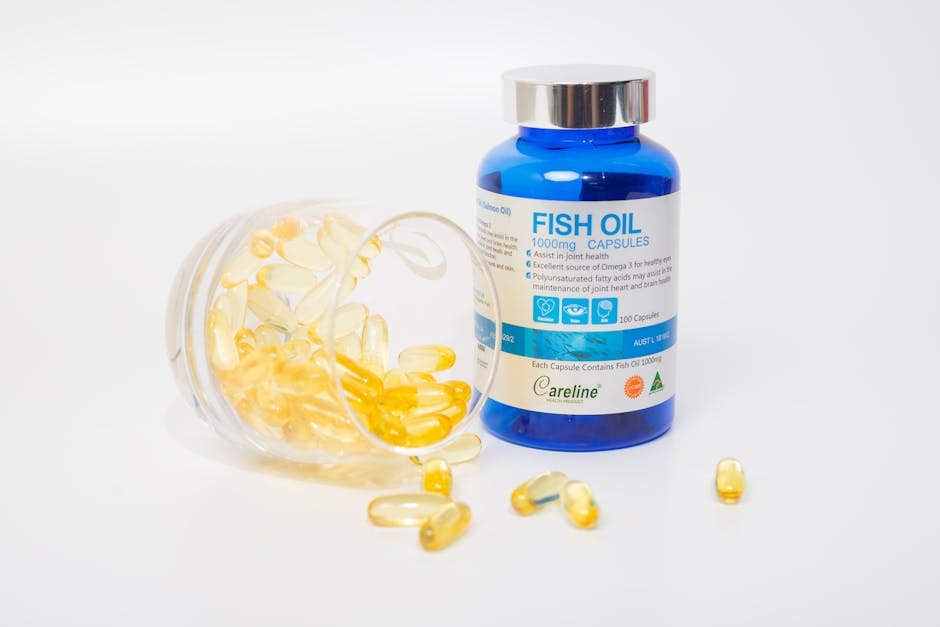
Walk into any pharmacy and the fish oil section is full of bottles claiming "1000 mg fish oil." Turn the bottle around, read the supplement facts. EPA 180 mg, DHA 120 mg. Total omega-3: 300 mg. Your "1000 mg" fish oil is 700 mg of unusable filler fat and 300 mg of the stuff you actually want.
This confusion is the single biggest reason omega-3 supplementation doesn't deliver what studies suggest it can. The benefits come at doses of 2-4 grams of EPA+DHA, not 300 mg. Most men taking fish oil take a small fraction of the dose that has evidence.
What Omega-3s Are and Why They Matter
Omega-3 fatty acids are a class of polyunsaturated fats. The two primary ones for human health:
- EPA (eicosapentaenoic acid): Anti-inflammatory, cardiovascular effects, mood support
- DHA (docosahexaenoic acid): Structural (brain and retinal cell membranes), neurological function
A third, ALA (alpha-linolenic acid), is present in flax, chia, and walnuts but converts to EPA/DHA inefficiently in humans (roughly 5-10% conversion). Plant sources of ALA don't reliably deliver the omega-3 benefits most research supports.
Typical Western diets are high in omega-6 (from vegetable oils and grain-fed meats) and low in omega-3. The ratio matters — omega-6:omega-3 ratios of 15:1 or higher are common in modern diets, compared to 1:1-4:1 in traditional diets with more seafood. The excess omega-6 context amplifies inflammatory pathways; omega-3 counterbalances them.
Evidence-Based Benefits
Cardiovascular. High-dose EPA (4 g/day, purified form in REDUCE-IT trial) reduced cardiovascular events by 25% in patients with elevated triglycerides and established cardiovascular disease. This is a substantial effect. Lower doses and mixed EPA/DHA formulations show more modest effects.
Triglyceride reduction. Reliably lowers triglycerides 15-30% at doses of 2-4 g/day. Useful adjunct for men with elevated triglycerides.
Inflammation. hsCRP and other inflammatory markers modestly reduced at 2-3 g/day.
Mood support. Moderate evidence for depression benefit, particularly at higher EPA ratios (EPA:DHA of 2:1 or higher, at doses of 1-2 g EPA). Adjunctive to antidepressant treatment in major depression.
Cognitive support. Mixed evidence for cognitive protection in aging; some positive signals.
Joint health. Reduces joint pain modestly in inflammatory arthritis; weaker evidence for non-inflammatory joint issues.
Dry eyes. Modest improvement.
Pregnancy and early development. DHA particularly important; not the focus here.
What Evidence Doesn't Support (At Standard Doses)
"Fish oil for general wellness" at the typical 300-500 mg combined EPA+DHA daily — limited measurable benefit. The dose is too low.
Major cognitive decline prevention in healthy populations — data is mixed, effect size small where present.
Muscle growth enhancement — marginal effects at best despite marketing claims.
Dramatic fat loss — not supported.
Skin benefits at typical doses — weak evidence; higher doses and specific conditions show some effect.
The Dose Question
Labeled "fish oil" mass vs. actual EPA+DHA content is the core confusion. A typical over-the-counter 1000 mg fish oil softgel provides:
- Fish oil: 1000 mg
- EPA: 180-220 mg
- DHA: 120-150 mg
- Total omega-3: 300-400 mg
- Filler fats: 600-700 mg
To reach 2 g/day of EPA+DHA, you'd need 5-7 of these capsules. At 3 g/day, 8-10 capsules.
Concentrated fish oil or triglyceride-form products provide higher EPA+DHA per gram of product. Quality brands might offer 600-800 mg EPA+DHA per 1000 mg softgel, reducing pill burden substantially.
Effective doses based on evidence:
- General anti-inflammatory, cardiovascular support: 2-3 g EPA+DHA daily
- Elevated triglycerides: 2-4 g daily
- Depression adjunct: 1-2 g EPA daily
- Post-MI cardiovascular protection (per guidelines): 1 g daily EPA+DHA at minimum
- Prescription Vascepa (icosapent ethyl) for high-risk patients: 4 g daily of purified EPA
Most "general health" recommendations underdose. If you're taking one 1000 mg capsule of standard fish oil daily, you're at ~300 mg — well below the evidence threshold for most benefits.
How to Read Labels
The "fish oil" total is meaningless. Look at the supplement facts panel for:
- EPA content per serving
- DHA content per serving
- Total omega-3 content (EPA+DHA, ignore ALA inflating the number)
- Serving size (often 2-4 capsules, not 1)
Calculate cost per gram of EPA+DHA across products. Concentrated formulations are often more economical despite higher per-bottle prices because you need fewer capsules.
Quality Considerations
Oxidation. Fish oils oxidize over time, forming rancid byproducts. Oxidation is a legitimate concern — some OTC brands have been found to have substantially oxidized product. Quality markers:
- Third-party testing (IFOS, ConsumerLab certifications)
- Recent production date
- Proper storage (cool, dark)
- No fishy aftertaste (suggests oxidation)
Form. Triglyceride form (natural form in fish) is slightly better absorbed than ethyl ester form (processed, cheaper). Either works; TG form is preferable if available at reasonable price.
Mercury/contaminants. Quality producers test for heavy metals, PCBs, etc. Most larger reputable brands are fine. Very cheap generic fish oil may skip testing.
Good brands: Nordic Naturals, Carlson, Kirkland Signature (surprisingly quality for price), Sports Research, OmegaVia (high concentration). Many others are fine; these are generally reliable.
Food Sources First
Before supplementing, consider dietary sources:
- Salmon (wild): 1.5-2 g EPA+DHA per 3 oz serving
- Sardines: 1-1.5 g per 3 oz
- Mackerel: 2-3 g per 3 oz (among highest)
- Anchovies: 0.5-1 g per 3 oz
- Tuna (varies by species): 0.3-1.5 g per 3 oz
- Oysters: ~500 mg per 3 oz
- Grass-fed beef: Low but present — ~50-100 mg per 3 oz
Eating fatty fish 2-3 times per week provides substantial omega-3 without supplementation. Supplements make sense for men who don't eat fish, can't afford or source quality fish, or need higher doses than dietary intake provides.
Mercury consideration for frequent fish eaters: alternate lower-mercury species (wild salmon, sardines, anchovies, Atlantic mackerel) rather than concentrating on high-mercury fish (swordfish, king mackerel, large tuna).
Prescription Options
For men with elevated triglycerides or cardiovascular disease, prescription omega-3 products may be appropriate:
Vascepa (icosapent ethyl): Purified EPA, FDA-approved for cardiovascular risk reduction in patients with elevated triglycerides and established CV disease. REDUCE-IT trial showed 25% reduction in major cardiovascular events at 4 g daily. Typically covered by insurance for appropriate patients.
Lovaza (omega-3-acid ethyl esters): Combination EPA/DHA, FDA-approved for severe hypertriglyceridemia. Less compelling cardiovascular outcome data than pure EPA.
For patients who need high-dose omega-3 therapy, prescription products offer pharmaceutical-grade purity and insurance coverage but cost more without insurance than OTC.
Side Effects and Considerations
Generally well-tolerated. Possible issues:
- Fishy burps — common with OTC fish oil. Enteric-coated or higher-quality products reduce this. Freezing capsules helps some people.
- GI upset — usually dose-dependent, resolves with reduction or with food
- Bleeding risk — theoretical concern at very high doses (>5 g) in combination with anticoagulants. Clinical bleeding from normal supplemental doses is rare.
- Atrial fibrillation signal — some large trials at 4 g/day showed slightly increased AFib risk. Discuss with doctor if you have cardiac history.
The Practical Protocol
If you eat fatty fish 2-3 times per week, supplementation is optional — you're getting meaningful omega-3 from diet.
If you don't eat fish regularly or want higher doses:
- Buy concentrated fish oil (at least 500 mg EPA+DHA per capsule)
- Take 4-6 capsules daily with food (yielding 2-3 g EPA+DHA)
- Store in refrigerator after opening
- Check for quality certifications and fresh manufacturing dates
Budget: $20-40 per month for adequate-dose omega-3 from quality brands.
Who Should Consider Higher Doses
- Men with elevated triglycerides (>150 mg/dL)
- Men with established cardiovascular disease
- Men with elevated hsCRP or inflammatory conditions
- Men with depression or mood disorders (EPA-weighted formulation)
- Men with joint pain from inflammation
Talk to your doctor about whether higher-dose omega-3 (3-4 g/day) is appropriate for your specific situation.
The Bottom Line
Omega-3 supplementation works — at the right dose. Most men's supplement strategy is taking one capsule per day of low-concentration fish oil, which provides 300 mg of EPA+DHA. This is below the evidence threshold for most benefits claimed.
Fix the dose. Take 2-3 g of actual EPA+DHA daily, either from concentrated supplements, regular fatty fish consumption, or both. Or don't supplement and save the money. The middle ground of inadequate supplementation is the worst of both worlds.