Full-Body MRI Screening: What the $2,499 Scan Actually Finds (and Misses)
Full-body MRI scans promise to catch cancer and disease years early. Here is what the scan actually finds, what it misses, and who should consider it.
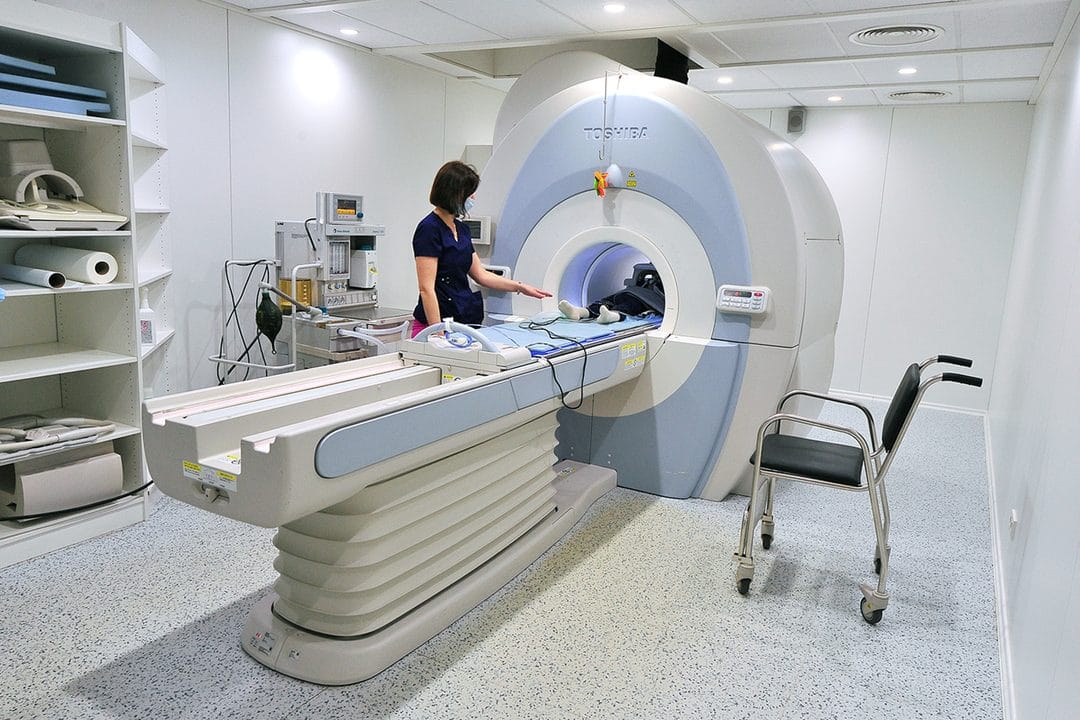
What the Scan Actually Looks At
Ask around at any gym that skews toward the finance-and-tech crowd, and someone will eventually bring it up: the full-body scan they booked for around $2,499, the mole they had photographed and forgot about, the small kidney cyst that showed up on the report and sent them down a three-week research spiral. Full-body MRI screening has moved from a Silicon Valley curiosity to a request men in their 40s bring to their own doctors — sometimes before their doctors have even heard of the company doing the scanning. Prenuvo, Ezra, and a handful of smaller imaging clinics now market these scans directly to consumers as a way to catch cancer, aneurysms, and organ damage years before symptoms appear. The pitch is seductive precisely because it promises certainty in a category — your own insides — where most men have none.
The technology itself is not new. Magnetic resonance imaging has been used diagnostically since the 1980s, and unlike a CT scan, it doesn't expose you to ionizing radiation — a genuine advantage for anyone who wants to be scanned repeatedly over a lifetime rather than once. A typical full-body protocol takes 60 to 90 minutes and images the brain, spine, chest, abdomen, pelvis, and major joints in a single session, usually without contrast dye. The radiologist reading the images is looking for masses, structural abnormalities, aneurysms, and early signs of organ disease — findings that a standard annual physical, built around blood pressure and blood work, simply isn't designed to catch. Some protocols also include a basic assessment of visceral fat and organ volume, layered on top of the diagnostic read. That is the entire pitch: your GP checks your labs, this checks your architecture.
How It Fits Next to the Scans You Already Know
Men who've been reading up on cardiovascular and longevity screening have likely already run into the coronary artery calcium scan and the DEXA body composition scan, and full-body MRI gets confused with both more often than it should. A CAC scan is a low-dose CT scan of exactly one thing — calcified plaque in the coronary arteries — and it produces a single number, the Agatston score, that correlates strongly with heart attack risk. DEXA measures bone density and the split between lean mass, fat mass, and visceral fat, and takes about ten minutes lying still under a low-dose X-ray arm. Full-body MRI does neither job particularly well. It won't quantify coronary calcium the way a CAC scan will, and it's not built to give you the precise body-composition percentages a DEXA scan spits out on a printed report. What it adds is breadth: one session that looks at organs, soft tissue, and structure across the entire body rather than one specific system. Men chasing a complete picture often end up doing all three over time rather than treating any single scan as sufficient on its own. Price them out together and the annual cost adds up fast — a CAC scan alone typically runs $100 to $400, a DEXA scan $50 to $150, and full-body MRI several thousand dollars more on top — so most men who do all three space them out rather than booking everything in the same calendar year.
The Incidentaloma Problem
The scan also finds things nobody asked about.
Radiologists call these incidentalomas — abnormalities discovered by chance that have nothing to do with why you got scanned, because in this case you got scanned for no symptomatic reason at all. Research on healthy, asymptomatic volunteers undergoing whole-body MRI has repeatedly found incidental findings in a meaningful share of participants, commonly cited in the range of a third to nearly half of all scans, and the overwhelming majority turn out to be benign: a liver hemangioma, a thyroid nodule too small to matter, an old, healed rib fracture nobody remembers. But "overwhelming majority benign" is not the same as "zero consequence." Every flagged finding triggers a follow-up path — a specialist referral, a repeat scan in six months, sometimes a biopsy — and that path costs money, time, and, for a lot of men, several sleepless weeks waiting on a report. A shadow on a pancreas image that turns out to be nothing still felt like something for the twenty-one days between the scan and the follow-up ultrasound. Multiply that experience across a clinic scanning thousands of healthy people a year, and you start to see why some radiologists worry the tool is generating more downstream anxiety and cost than disease it actually prevents.
What Full-Body MRI Still Doesn't Catch
Here is the part the marketing pages tend to bury: full-body MRI is not a replacement for the screening tests you already have on your calendar. It does not reliably detect early-stage prostate cancer the way a PSA test combined with a digital exam does, and most protocols aren't optimized to spot the small polyps a colonoscopy catches directly, because MRI resolution at that scale simply isn't fine enough for the colon's inner lining. Skin cancer — one of the most common and most treatable cancers in men over 40 — needs a dermatologist's eyes and a dermatoscope, not a magnet. And because MRI images structure rather than blood chemistry, it tells you nothing about your cholesterol panel, your fasting glucose, or your kidney function numbers. Think of it as one layer of a screening strategy, not the strategy itself.
- Blood-based markers (lipids, glucose, inflammation) still require a blood draw, full stop.
- Colon polyps are still best found and removed during colonoscopy, not viewed on a scan.
- Skin lesions need a dermatologist's direct exam — MRI doesn't image the skin surface in any useful way.
- Early prostate cancer detection still leans on PSA trends over time, among other tools your urologist will walk you through.
The Cost and Where Men Are Actually Getting Scanned
Prenuvo's standard whole-body scan is typically listed around $2,499, with add-on options that push the price higher. Ezra offers a shorter protocol that skips several sequences, starting closer to $1,350, with its longer scan priced nearer to Prenuvo's range. Neither is covered by standard U.S. health insurance, since both are marketed as elective screening rather than diagnostic imaging ordered by a physician for a specific complaint — insurers generally won't reimburse a scan that wasn't medically indicated. A handful of concierge medicine practices bundle whole-body MRI into annual membership fees that can run several thousand dollars a year, which changes the math if you're already paying for that tier of care anyway. On repeat frequency, most clinics and the physicians who work with them suggest every two to three years rather than annually for someone with no specific risk factors — scanning every twelve months mostly just multiplies the incidentaloma odds without meaningfully improving early detection over that shorter interval.
Who Should Actually Consider This
If you have a family history of early-onset cancer, a known inherited cardiovascular condition, or a personal history that makes your doctor already nervous, the scan is worth a serious conversation with that doctor before you book it yourself. Going in with a specific reason — and a physician who'll actually review the report with you — turns the scan from a novelty into a genuine data point. Skip it, on the other hand, if health anxiety already runs your life; a report flagging three "findings of uncertain clinical significance" will not calm a mind that already spirals over normal symptoms, and you'll likely end up chasing three separate specialists for reassurance you could have gotten cheaper elsewhere. The men who get the most value tend to be the ones who can hold ambiguous results loosely and follow up methodically instead of catastrophizing, and who treat the scan as one input among several rather than a verdict.
What to Ask Before You Book
Before handing over your card number, ask who actually reads the images — a board-certified radiologist, and ideally more than one set of eyes on anything flagged. Ask whether the report goes to your own primary care doctor automatically or whether that's on you to arrange, because a PDF sitting in your inbox with an unexplained abbreviation isn't a follow-up plan. Ask what happens, procedurally, if something ambiguous turns up: is there a nurse navigator, a direct line to a specialist, or are you handed a printout and a phone number to figure out yourself? And ask what the scan doesn't cover, specifically for your risk profile, so you're not quietly skipping the colonoscopy or PSA test you still need because you assumed the MRI already handled it.
The technology works. The imaging is real, the resolution is genuinely impressive, and for the right person with the right follow-up plan, it can surface something worth catching early. What it isn't is a shortcut around the boring, unglamorous screening tests — the blood panel, the colonoscopy, the skin check — that still catch most of what kills men in their 40s and 50s. Book the scan if you want it and can afford the follow-up costs it might generate. Just don't let a slick imaging report replace the appointment with your own doctor that was already overdue.