Vision Loss at 40: Presbyopia and What You Can Actually Do
That moment when you can't read the menu hit you sometime in your early 40s. It's presbyopia, it's nearly universal, and you have more options than reading glasses from the drugstore.
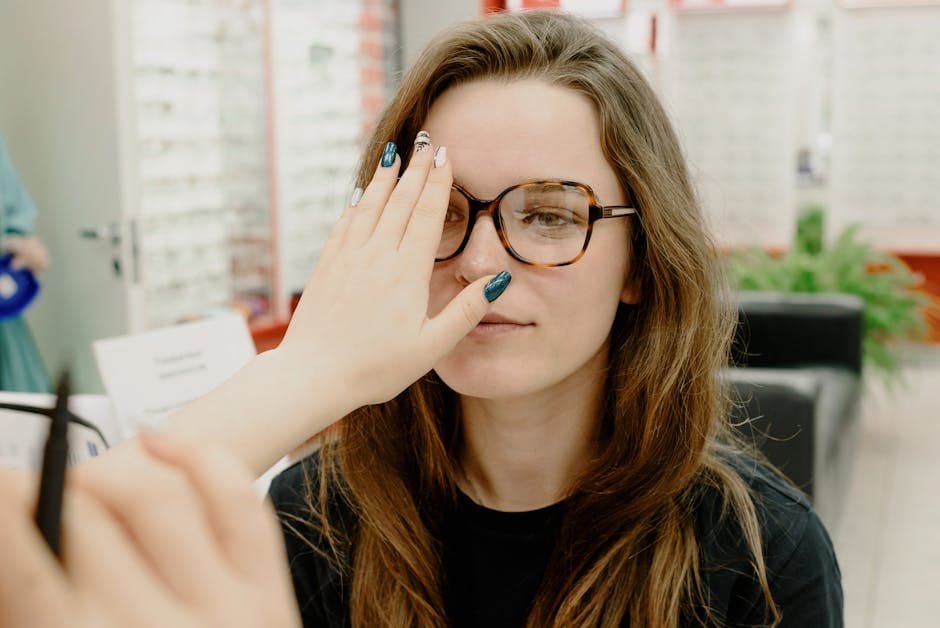
Somewhere between 40 and 45, a majority of men notice they can't focus on close objects the way they used to. Menus require stretching your arm farther; the phone screen gets held at odd distances; small print that used to be easy now requires effort or squinting. Welcome to presbyopia — age-related loss of near focus. Nearly universal, largely unavoidable, and accompanied by more options than most men realize.
What Presbyopia Is
Your eye focuses on close objects by having the crystalline lens change shape, becoming more curved. This shape change is performed by small ciliary muscles pulling on the lens. The lens, throughout life, gradually stiffens and loses its ability to change shape. By your mid-40s, enough stiffness has accumulated that close focus fails.
The mechanism isn't a disease; it's a predictable structural change of aging. Nothing you did caused it faster, and no supplement will prevent or reverse it (despite marketing claims otherwise). It progresses through your 50s and stabilizes around 60-65 when the lens is essentially fully rigid.
Presbyopia is separate from other vision changes — myopia (distance blur), hyperopia (farsightedness), astigmatism, cataracts. Many men develop presbyopia on top of existing vision issues, creating layered corrections.
The Cascade of Realizations
Typical sequence:
- "The menus in this restaurant are printed too small" (age 40-42)
- Stretching arms to read increases over months
- Small print becomes uncomfortable under normal lighting
- Reading glasses purchased at drugstore (age 42-46)
- First prescription readers (age 44-48)
- Consideration of bifocals, progressives, or other options (age 45-55)
The progression isn't a personal failing. It's physical law.
Options
Over-the-counter reading glasses. Cheapest option. $15-30 per pair. Available in standard strengths (+1.0 to +3.5 typically). Fine for temporary or occasional use. Limitations: no custom fit, same strength in both eyes, no astigmatism correction, no distance vision.
Prescription reading glasses. Custom-made to your specific prescription. Addresses any asymmetry between eyes and astigmatism. $150-600 depending on frames and lenses.
Bifocals. Distance on top, near on bottom, visible lens line. Effective but cosmetically noticeable.
Progressive lenses ("no-line bifocals"). Gradual transition from distance to near without visible line. Cosmetically preferred. Takes adaptation (typically 1-2 weeks of adjustment). $300-800+ per pair.
Computer-distance glasses. Intermediate distance correction, specifically for monitor distance. Useful for desk workers with chronic computer use.
Multifocal contact lenses. Provide distance and near correction in contact lens form. Not everyone adapts well; some experience vision quality trade-offs. Worth trying if you prefer contacts.
Monovision contacts. One eye corrected for distance, one for near. Brain adapts to use whichever is needed. Adaptation varies — some love it, some find it strange.
Surgical options. LASIK monovision (same principle as contacts but permanent), refractive lens exchange (replacing the natural lens with an artificial one, usually done when cataracts are considered), or newer procedures.
LASIK and Similar
Refractive surgery (LASIK, PRK, SMILE) is primarily for correcting myopia/hyperopia/astigmatism. For presbyopia alone, traditional LASIK doesn't solve the problem — your cornea is fine; it's the internal lens that's the issue.
LASIK monovision (intentionally making one eye near-sighted) can help. Trade-offs include reduced depth perception and some loss of best-corrected distance acuity in the near eye.
Refractive lens exchange (RLE) replaces the crystalline lens with an intraocular lens (IOL). Similar to cataract surgery but done before cataracts develop. Multifocal IOLs can correct distance, intermediate, and near. Downsides: surgical procedure, cost ($4,000-8,000 per eye typically), some visual trade-offs depending on lens choice.
If cataracts develop later (common in 60s-70s), that surgery can correct presbyopia as a bonus if multifocal IOLs are chosen.
Other Age-Related Eye Conditions
Beyond presbyopia, middle-aged men should be aware of:
Cataracts. Cloudiness of the natural lens, usually starting in 50s-60s, progressing slowly. Eventually requires surgical replacement. Modern cataract surgery is highly effective and routine.
Glaucoma. Optic nerve damage typically from elevated eye pressure. Often asymptomatic until significant vision loss. Screening via eye exam with pressure measurement and optic nerve assessment. Treatable with eye drops (daily), surgery if needed.
Age-related macular degeneration (AMD). Progressive damage to the macula (central retina), affecting central vision. Risk factors include age, smoking, family history. Some treatable forms; anti-VEGF injections for wet AMD are effective.
Diabetic retinopathy. Retinal damage from diabetes. All diabetic men should have annual dilated eye exams regardless of symptoms.
Retinal tears/detachments. Sudden onset of floaters, flashes of light, or shadow in vision. Medical emergency. Call ophthalmologist immediately or go to ER.
Regular eye exams catch most of these early when treatment is most effective.
Eye Exam Schedule
Recommended comprehensive eye exam frequency:
- 20s-30s, no issues: Every 2-5 years
- 40-54: Every 2-4 years
- 55-64: Every 1-3 years
- 65+: Annually
More frequently if:
- Vision changes
- Diabetes or other systemic disease
- Family history of glaucoma or macular degeneration
- Highly myopic (increased retinal risks)
- Prior eye surgery or injury
Screen Time and Eyes
Digital eye strain (computer vision syndrome) is real but doesn't cause permanent damage. Symptoms: dry eyes, fatigue, headaches, blurred vision after screen use.
Management:
- 20-20-20 rule. Every 20 minutes, look at something 20 feet away for 20 seconds. Rests focusing muscles.
- Proper monitor setup. Screen 20-28 inches away, top of screen at or slightly below eye level.
- Lighting. Avoid glare; adequate ambient light.
- Blink consciously. Screen use reduces blink rate, contributing to dry eyes.
- Artificial tears if dry.
- Blue light filtering — some benefit for sleep if used in evening, minimal benefit for eye strain itself despite marketing.
Nutrition and Eye Health
Evidence-based dietary factors:
- Omega-3 fatty acids. Associated with lower AMD and dry eye risk.
- Lutein and zeaxanthin. Carotenoids concentrated in the macula. Found in dark leafy greens. Some evidence for AMD prevention.
- Vitamin C, E, zinc. Part of AREDS formulations for AMD risk reduction.
- Limiting smoking. Smoking is strongly associated with AMD, cataracts, and optic nerve damage.
For average-risk men, general healthy diet with vegetables and fish covers the dietary bases. Specific AMD supplements (AREDS-2 formulation) are for those with intermediate AMD on ophthalmologist evaluation.
UV Protection
Long-term UV exposure is associated with cataracts and likely AMD. Sunglasses with UV400 protection block 100% of UVA/UVB. Wear consistently in strong sunlight, including during driving.
Wraparound styles or larger lenses provide more coverage. The darkness of the lens doesn't indicate UV protection — that's a function of UV filtering in the lens material, specified as "100% UV protection" or "UV400."
Eye Injuries
Regardless of age, protect eyes during:
- Sports (especially racquet sports, hockey, baseball)
- Home projects (drilling, sawing, hammering)
- Yard work (weed whacking, chainsaw use)
- Chemical handling
Eye injuries are often irreversible. Safety glasses are cheap; eye replacement isn't an option.
The Practical Bottom Line
Presbyopia will affect you in your 40s regardless of what you do. The right intervention depends on your preferences and lifestyle:
- Occasional reading: OTC readers fine
- Daily use, especially with other corrections: prescription progressives
- Active lifestyle or contact lens preference: multifocal contacts or monovision
- Willing to pay for permanent solution: refractive lens exchange or similar
Get comprehensive eye exams periodically — presbyopia isn't the only age-related eye issue, and several others are much more consequential if missed. Talk to your eye doctor about what's appropriate for your specific situation and preferences.
The first reading glasses aren't a defeat. They're a tool. Use whatever helps you see clearly, without treating the need for them as a moral issue.