The Thyroid Test Men Skip: TSH and Free T4 Explained
Men blame fatigue and low libido on testosterone or stress — but an underactive thyroid produces almost the same symptoms, and it's rarely the test a GP orders first.
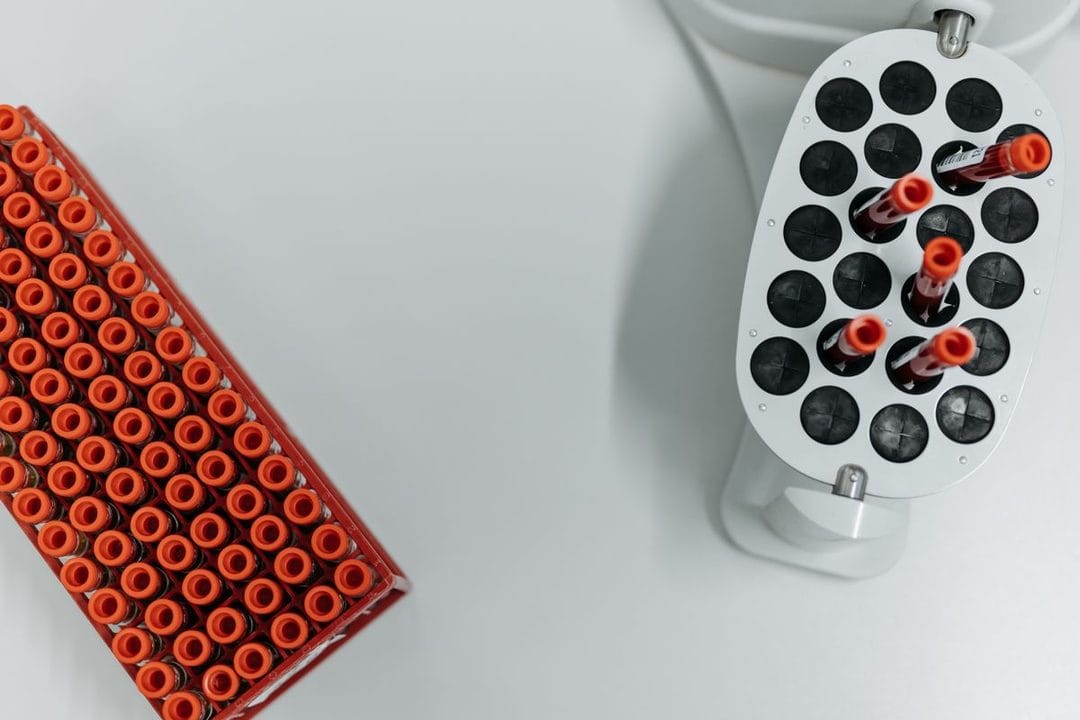
Your GP orders a full blood count, a lipid panel, maybe an HbA1c if you mention feeling tired all the time. What rarely makes the list, unless you push for it, is a thyroid function test. That is a strange gap, because an underactive thyroid produces almost the exact symptom cluster men over 40 already blame on stress, poor sleep, or "just getting older" — fatigue that coffee doesn't touch, a stubborn few kilos that won't shift despite the gym, a libido that's quietly gone flat, and skin that's drier than it used to be. Most of those men get a testosterone test. Fewer get a TSH.
The Symptom Overlap Nobody Flags
Hypothyroidism and low testosterone share more territory than most GPs have time to untangle in a ten-minute appointment. Both cause fatigue, low mood, reduced libido, brain fog, and unwanted weight gain. Both can thin the hair on your head and, less obviously, the outer third of your eyebrows — a sign that gets missed constantly because nobody's looking for it specifically. Cold intolerance is more distinctive to thyroid disease (if you're the one person in the office reaching for a jumper in September), as is constipation and a voice that sounds slightly hoarser than usual. But on a symptom checklist alone, a man in his 40s with an underactive thyroid and a man with low T can look almost identical on paper. This matters practically because testosterone testing has become routine in men's health content and private clinics over the past few years, while thyroid testing largely hasn't followed the same path. A 2023 audit cited by the British Thyroid Foundation found thyroid function tests are requested roughly eight times more often in women than in men presenting with comparable fatigue-type symptoms — not because men get it less (the disease genuinely is less common in men, roughly one case for every five to eight in women), but because clinicians are less likely to consider it as a differential in a male patient. If your GP tests testosterone and it comes back normal, ask for TSH and free T4 before accepting "it's probably just stress."
What TSH and Free T4 Actually Measure
Thyroid-stimulating hormone (TSH) is made by the pituitary gland, not the thyroid itself — it's the pituitary's way of telling the thyroid how hard to work. When thyroid hormone output drops, TSH rises to compensate; when output is too high, TSH falls. That's why TSH, not the thyroid hormones themselves, is the first-line screening test: it moves before free T4 does, catching problems earlier. The standard UK reference range for TSH is roughly 0.4–4.0 mIU/L, though individual labs vary slightly and some report up to 5.0 as the upper limit. Free T4 (the active, unbound thyroid hormone circulating in blood) typically sits between 12 and 22 pmol/L.
Reading the combination, not the single number
A TSH above range with a low free T4 is overt hypothyroidism — straightforward, and it gets treated. A TSH above range with a normal free T4 is subclinical hypothyroidism, and that's where things get genuinely contested among endocrinologists, which the next section covers in detail. A TSH below range with elevated free T4 is hyperthyroidism, considerably rarer in men over 40 and usually driven by Graves' disease or a toxic nodule rather than anything lifestyle-related.
Subclinical Hypothyroidism: The Grey Zone That Splits Endocrinologists
This is the diagnosis that generates the most confusion, and for good reason — the evidence genuinely doesn't point in one direction. Subclinical hypothyroidism means your TSH sits mildly elevated (typically 4.5–10 mIU/L) while free T4 stays within the normal range. Roughly a third of men in this category will normalise on their own within a year with no treatment at all; a smaller proportion will progress to overt hypothyroidism, usually driven by underlying Hashimoto's thyroiditis, an autoimmune process where the immune system gradually attacks thyroid tissue. The TRUST trial, published in the New England Journal of Medicine in 2017, tested levothyroxine against placebo in over 700 adults aged 65 and above with subclinical hypothyroidism and found no meaningful improvement in fatigue, muscle strength, or quality of life after a year of treatment. That single study reshaped clinical guidance considerably. Current NHS and NICE guidance generally recommends treatment only when TSH exceeds 10 mIU/L, or when it's mildly elevated alongside a positive thyroid peroxidase antibody test (a marker for Hashimoto's) and genuine symptoms. Treat every mild TSH bump reflexively and you risk overshooting into subclinical hyperthyroidism instead, which carries its own cardiovascular and bone-density costs — atrial fibrillation risk climbs measurably in older patients kept slightly over-replaced for years.
Why This Gets Missed in Men Specifically
Autoimmune thyroid disease is genuinely rarer in men — Hashimoto's thyroiditis runs at roughly a 5:1 to 8:1 female-to-male ratio, which is one honest reason clinicians don't reach for the test as a default. But rarer isn't the same as rare enough to skip screening for entirely, especially once other risk factors stack up. Men over 60, men with type 1 diabetes or another autoimmune condition, men with a first-degree relative who has thyroid disease, and men on amiodarone (a common antiarrhythmic) or lithium all carry meaningfully elevated risk regardless of sex.
Statins add an odd wrinkle worth knowing about if you're one of the huge number of men over 45 now taking one. Untreated hypothyroidism raises LDL cholesterol and can push creatine kinase up enough to produce genuine muscle aches — symptoms that get filed straight under "statin intolerance" and result in a med switch rather than a thyroid check. If you started a statin and developed unexplained muscle soreness or fatigue within a few months, a TSH test before you assume it's the drug is a five-minute ask that can save you months of unnecessary medication-swapping.
The Biotin Trap Almost Nobody Warns You About
If you've been dosing high-dose biotin — the "hair, skin and nails" supplement stacked at 5,000–10,000mcg that's become a fixture in a lot of men's supplement routines alongside creatine and magnesium — stop taking it for 48 hours before any thyroid blood draw. Biotin interferes directly with the immunoassay technology most UK and US labs use to measure TSH and free T4, and it doesn't cause a small rounding error: case reports in the clinical literature describe biotin producing falsely low TSH alongside falsely high free T4, a combination that mimics hyperthyroidism convincingly enough that patients have been referred for unnecessary thyroid scans and even started on antithyroid medication before anyone thought to ask about supplements. The FDA issued a specific safety communication about this interference in 2019, and it still catches people out because biotin doesn't feel like a "medication" worth mentioning to a GP.
The other blind spot: over-testing when nothing's actually wrong
There's a mirror-image problem worth naming honestly. A subset of men, particularly ones already deep into biomarker tracking, will retest thyroid panels every few months chasing a "perfect" TSH number that doesn't meaningfully exist — TSH fluctuates by up to 40% across a single day, tends to run higher in the early morning, and shifts slightly with recent illness, poor sleep, or even a hard training block. One mildly elevated reading, on its own, without symptoms or a repeat test eight to twelve weeks later confirming the pattern, is not a diagnosis. Treat a single number as a prompt to look closer, not as a result to act on immediately.
Getting Tested Without Waiting for a Crisis
On the NHS, thyroid function tests are bundled fairly readily into a "tired all the time" blood panel alongside FBC, ferritin, B12, and HbA1c — ask your GP explicitly for TSH if it isn't mentioned, since some surgeries only add it on a second visit if initial bloods come back unremarkable. Private options exist too: Medichecks and Monitor My Health both offer a basic thyroid panel (TSH plus free T4) from around £29, and a fuller panel including free T3 and thyroid antibodies for £45–£65. Worth knowing before you pay for it privately, though: a private lab flagging a borderline result doesn't obligate your GP to treat it, and the NICE thresholds above still apply regardless of which lab ran the test.
Get tested if you've had two or more of the following for six weeks or longer with no obvious explanation: persistent fatigue unresponsive to better sleep, unexplained weight gain of more than 2–3kg, cold intolerance, dry skin or hair thinning that's new, low mood that doesn't fit a stressor you can name, or constipation that's new for you. And test regardless of symptoms if you're over 60, have type 1 diabetes, have a close relative with thyroid disease, or take amiodarone or lithium.
If the Result Comes Back Abnormal
Overt hypothyroidism is treated with levothyroxine, a synthetic version of T4 taken once daily, ideally on an empty stomach 30–60 minutes before breakfast (coffee and calcium supplements both blunt absorption if taken too close together). Dosing starts conservatively — usually 25–50 micrograms in men over 50 or anyone with existing heart disease, to avoid overshooting the heart's tolerance for a sudden change in metabolic rate — and gets rechecked at six to eight weeks, adjusting in small increments until TSH settles mid-range. Most men feel a genuine difference in energy and mood within four to six weeks of reaching the correct dose; the mistake to avoid is judging the drug a failure at week two, before the dose has had time to stabilise.
One caveat that's easy to miss: correcting a genuinely underactive thyroid will not restore libido or energy on its own if testosterone is also low — the two conditions coexist often enough in men over 45 that fixing one and expecting the other to resolve itself leaves a meaningful number of men still unsatisfied with the result. Test both, treat both if both are abnormal, and don't let a single normal-looking panel talk you out of investigating the symptom that sent you to the GP in the first place.